
In short: Wet carpet can often be saved if the water was clean and drying starts within 24 to 48 hours: extract the water, then dry it with dehumidifiers and fans, as EPA's cleanup table describes. The pad underneath is often replaced, because it holds water like a sponge. Carpet soaked by sewage or floodwater from outside generally can't be saved, and neither can its pad.
| The water was | The carpet | The pad |
|---|---|---|
| Clean (a supply line, a water heater) | Often extracted and dried in place, if the work starts within a day or two | Often replaced |
| Gray (a washing machine overflow) | Sometimes cleaned and saved | Almost always replaced |
| Black (sewage, floodwater from outside) | Removed and thrown away | Removed and thrown away |
Three questions decide it
Where did the water come from?
Clean water, from a supply line, a water heater or a tub that ran over, is the best case. Gray water, such as a washing machine overflow, is harder, and the pad almost always goes. Water from a sewer backup, a toilet backup or a flood from outside is grossly contaminated: carpet and pad soaked by it should be removed and thrown away, along with other porous materials it reached. EPA's guidance notes that contaminated water calls for protective equipment and containment.
How long has it been wet?
EPA's window for drying is 24 to 48 hours. Past that, mold can start to grow, and carpet backing can begin to separate from the face fibers, which is called delamination. Delaminated carpet won't lie flat again, even after it dries.
What's underneath?
EPA's table notes that the subfloor under the carpet must also be cleaned and dried. Concrete in a basement can be extracted and dried with dehumidifiers and fans. A wood subfloor upstairs can swell and needs careful drying, with readings taken until it's back to normal.
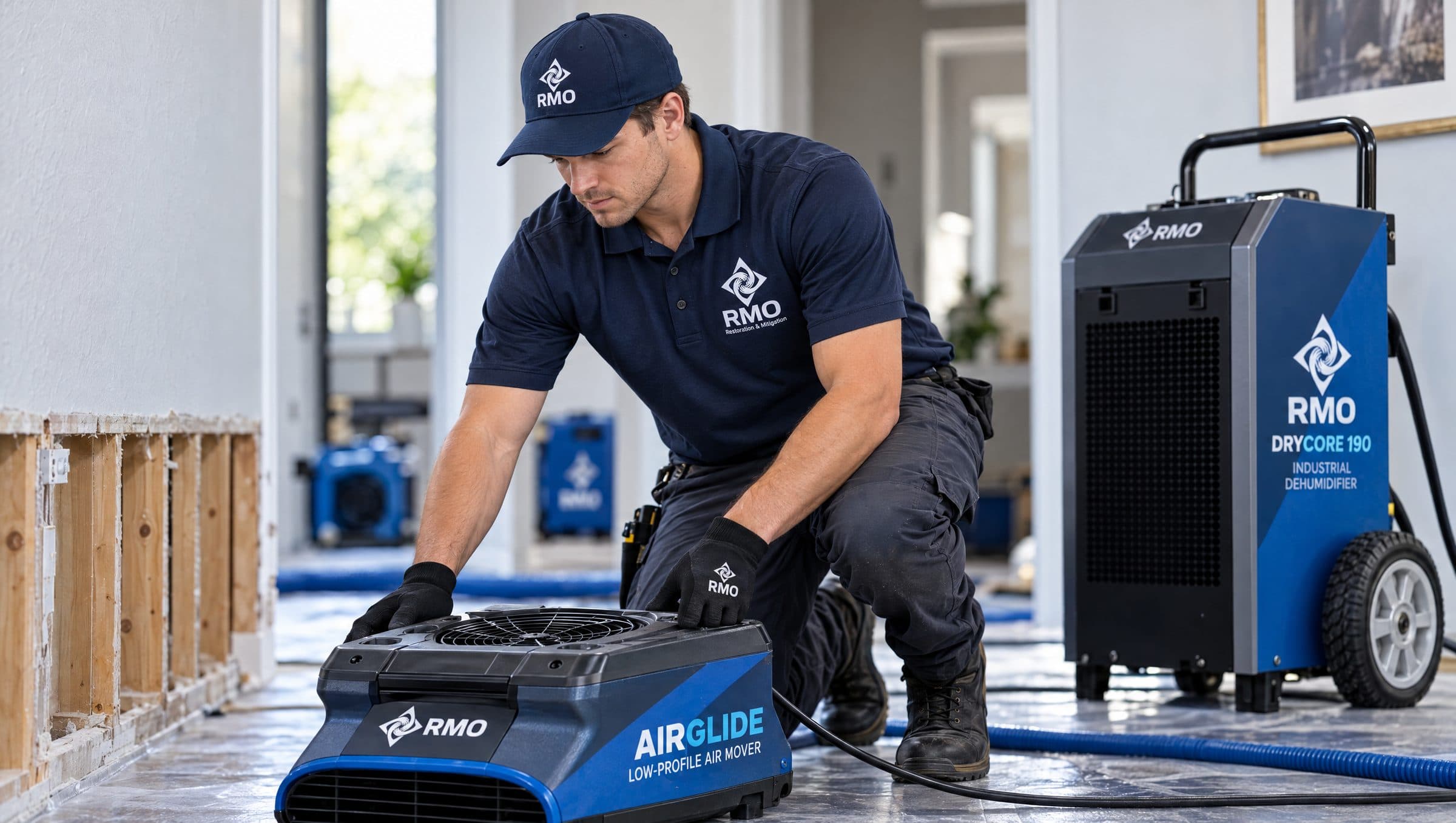
What a professional crew does
Find the source
And decide the category of water.
Extract
With truck-mounted or portable extractors. Extraction removes far more water than fans ever will.
Lift and dry
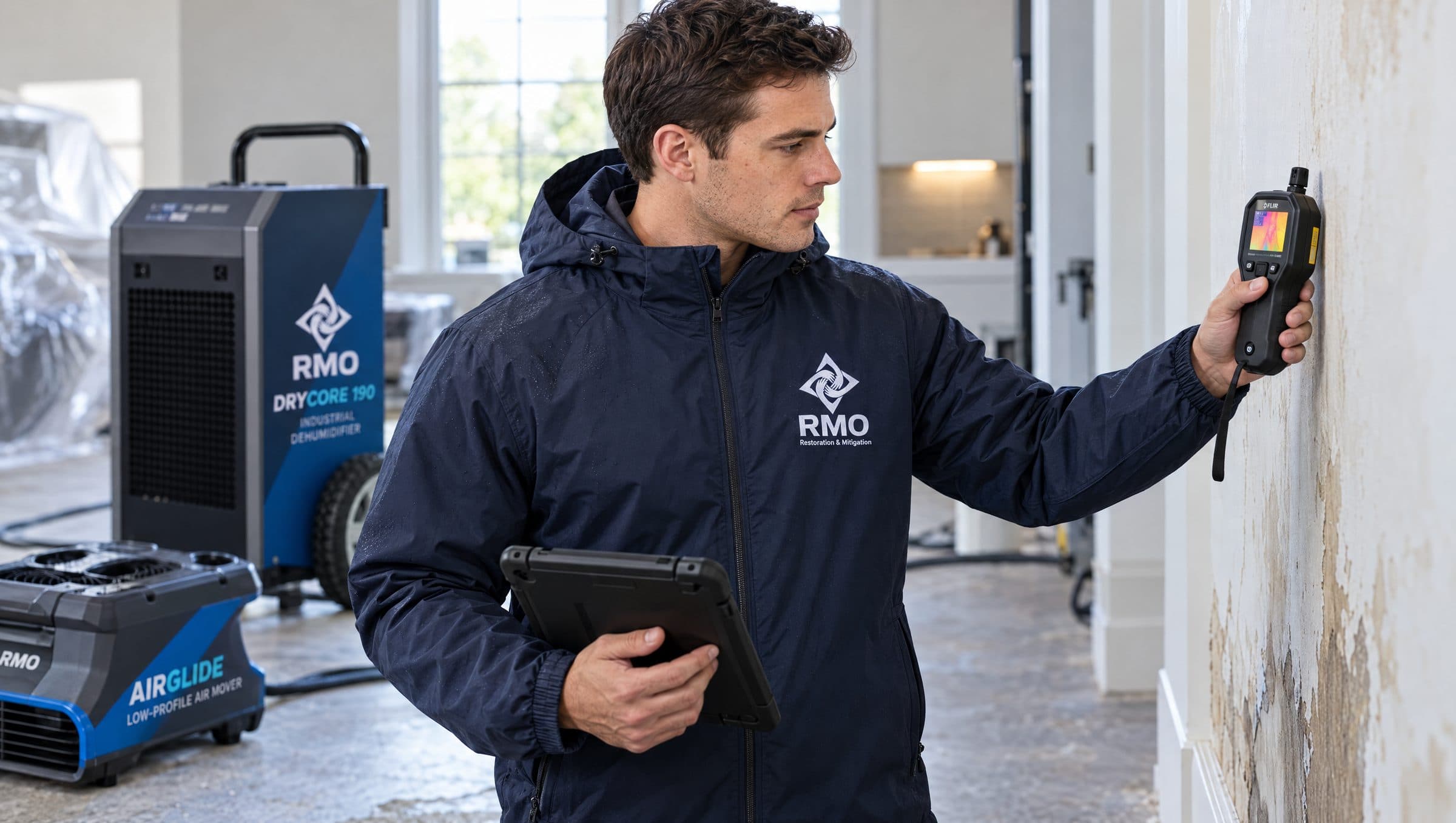
Lift the carpet where needed, remove a wet pad, and dry the carpet and subfloor with air movers and dehumidifiers.
Measure
The carpet, the pad if it stays, and the subfloor, every day until they read dry.
Clean or replace
Clean and deodorize the carpet and reinstall it, or replace it if it delaminated or was contaminated.
Before help arrives
Can I dry wet carpet with fans?
Fans alone rarely get the pad and subfloor dry in time. Extraction first, then air movers and dehumidifiers, with readings, is what saves carpet.
Why does the pad have to go?
It holds water like a sponge and dries slowly, so it's often replaced even when the carpet is saved.
What is delamination?
The carpet's backing separating from the face fibers after it stays wet too long. A delaminated carpet won't lie flat again.