
In short: With professional equipment running, many water damage jobs dry in about three to five days. A small clean-water leak caught early can be quicker; a flooded basement, hardwood floors, plaster walls or concrete can take longer. What matters most is how fast drying starts. EPA's guidance is to dry water-damaged areas within 24 to 48 hours to prevent mold, and the job is finished when the materials measure dry, not when they feel dry.
What decides how long it takes
How long the water sat
Water left for days soaks deeper into wood, drywall and concrete, and may have to be removed rather than dried.
What got wet
Drywall and carpet give up water fairly quickly. Hardwood, plaster, concrete and framing hold it much longer, and EPA cautions against using too much heat on hardwood floors.
Where it went
Under flooring, inside wall cavities, into the ceiling below. Hidden water is the usual reason a job takes longer than expected.
The weather
Humid summer air holds more moisture, so dehumidifiers matter even more in August than in January.
The equipment
Extraction first, then the right number of dehumidifiers and air movers for the space, adjusted as the readings change.
How a professional knows it's dry
Day one: set the goal
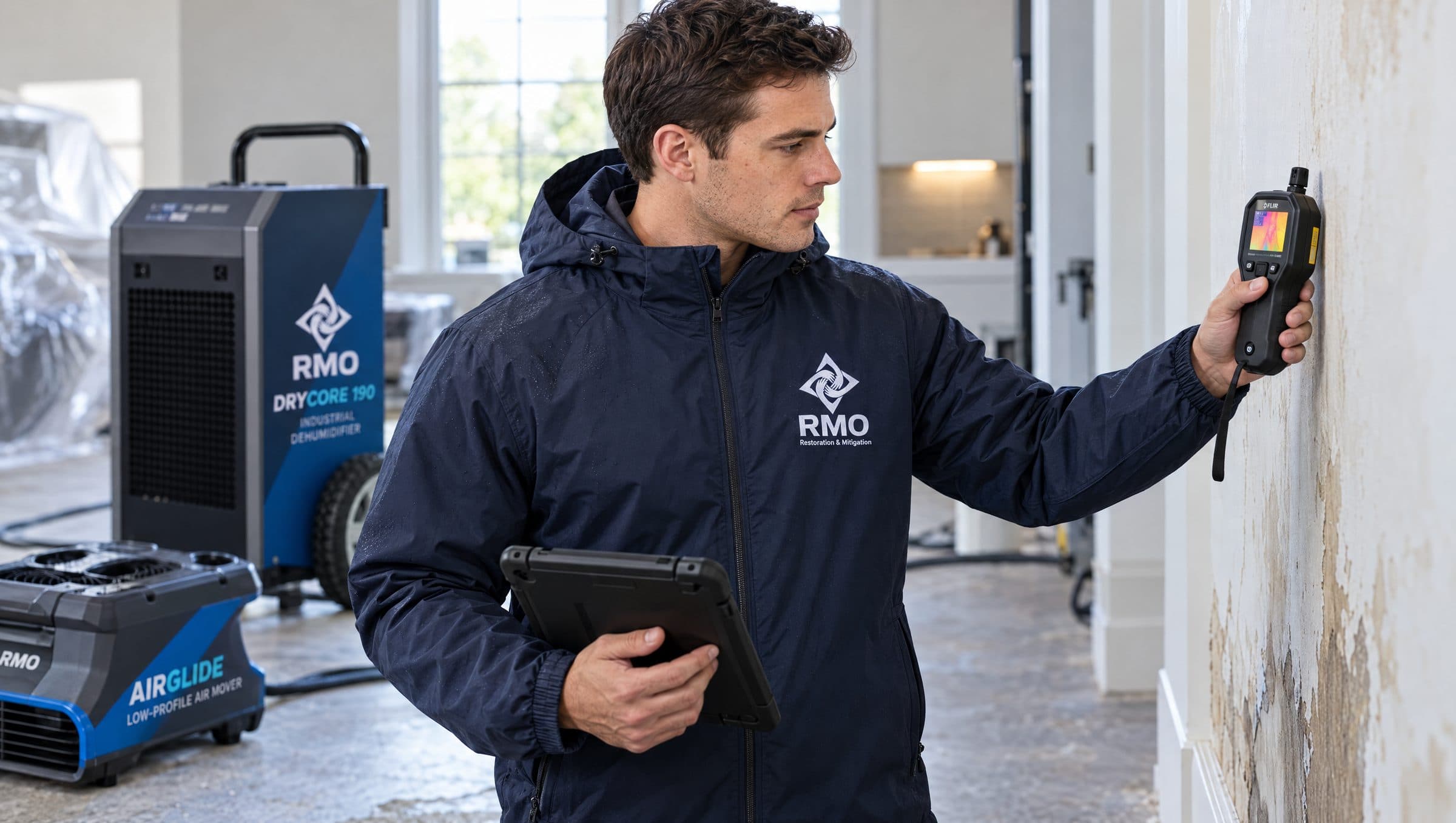
A technician measures the wet materials, and the same materials in a part of the building the water never reached. Those unaffected readings become the goal.
Every day after: measure again
The crew records the numbers in a drying log, and moves or adds equipment where readings are slow to fall.
Done: the numbers match
When the wet materials read the same as the dry ones, the equipment can leave and the rebuild can start.
That log matters twice: it shows your insurer the drying was done properly, and it protects you from the most common mistake in water damage, closing up a wall that is still wet inside.
Why the equipment runs around the clock
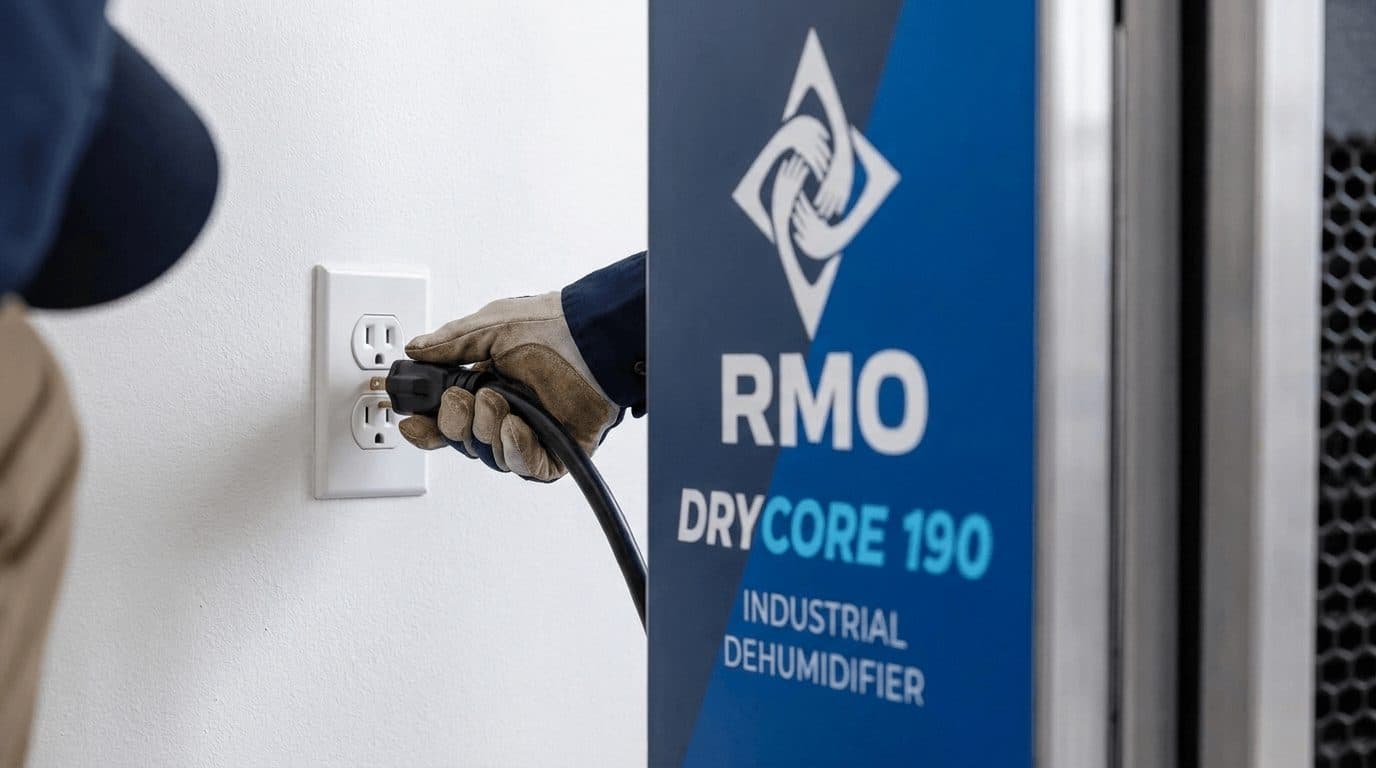
Air movers pull moisture out of surfaces into the air, and dehumidifiers pull it out of the air. Switching them off at night, or because of the noise, lets the room's humidity climb back up and slows everything down. If the noise is a problem, tell the crew; they can often move units or plan the work around you, but the drying needs to keep going.
What you can do to help
When drying isn't the answer
Some materials should come out instead: anything soaked by sewage, insulation, ceiling tiles, and drywall that has swollen or lost its seams, according to EPA's cleanup table. If mold has already grown, or materials have been wet for more than 48 hours, EPA says to follow its mold remediation guidance rather than simply drying.
Can I turn the dehumidifiers off at night?
Please don't: humidity climbs back up and drying slows. If the noise is a problem, the crew can often move units or plan around you.
How do I know the job is really finished?
The wet materials measure the same as the dry ones, and there's a drying log that shows it. Not when it feels dry.
Why is my hardwood floor taking so long?
Hardwood holds water and can't take much heat, so it dries slowly and carefully. Rushing it can cup or crack the boards.