
Water damage restoration for Metro Detroit businesses
Burst pipes, failed water heaters, roof leaks and sprinkler discharges can take a floor, or a whole building, out of service. RMO removes the water, dries the structure to measured goals and rebuilds what had to come out, with the records your insurer and auditors expect.
24-hour emergency hotline248-845-0000A person answers, day or nightHow we restore a water-damaged commercial building
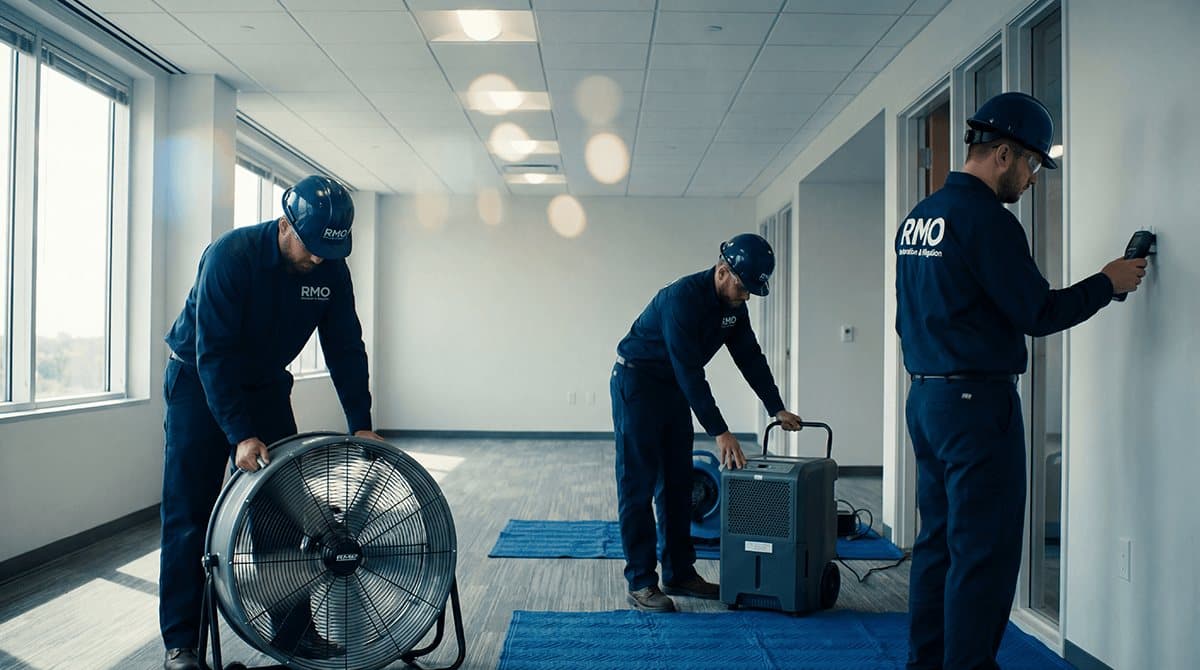
Water travels fast in commercial buildings. It runs along slab floors under partition walls, soaks ceiling tiles on the floor below and wicks up drywall into cavities behind casework and cubicles. What shows on the first walk-through is usually only part of what is wet, so every job starts with moisture mapping to find the edges before anything is removed.
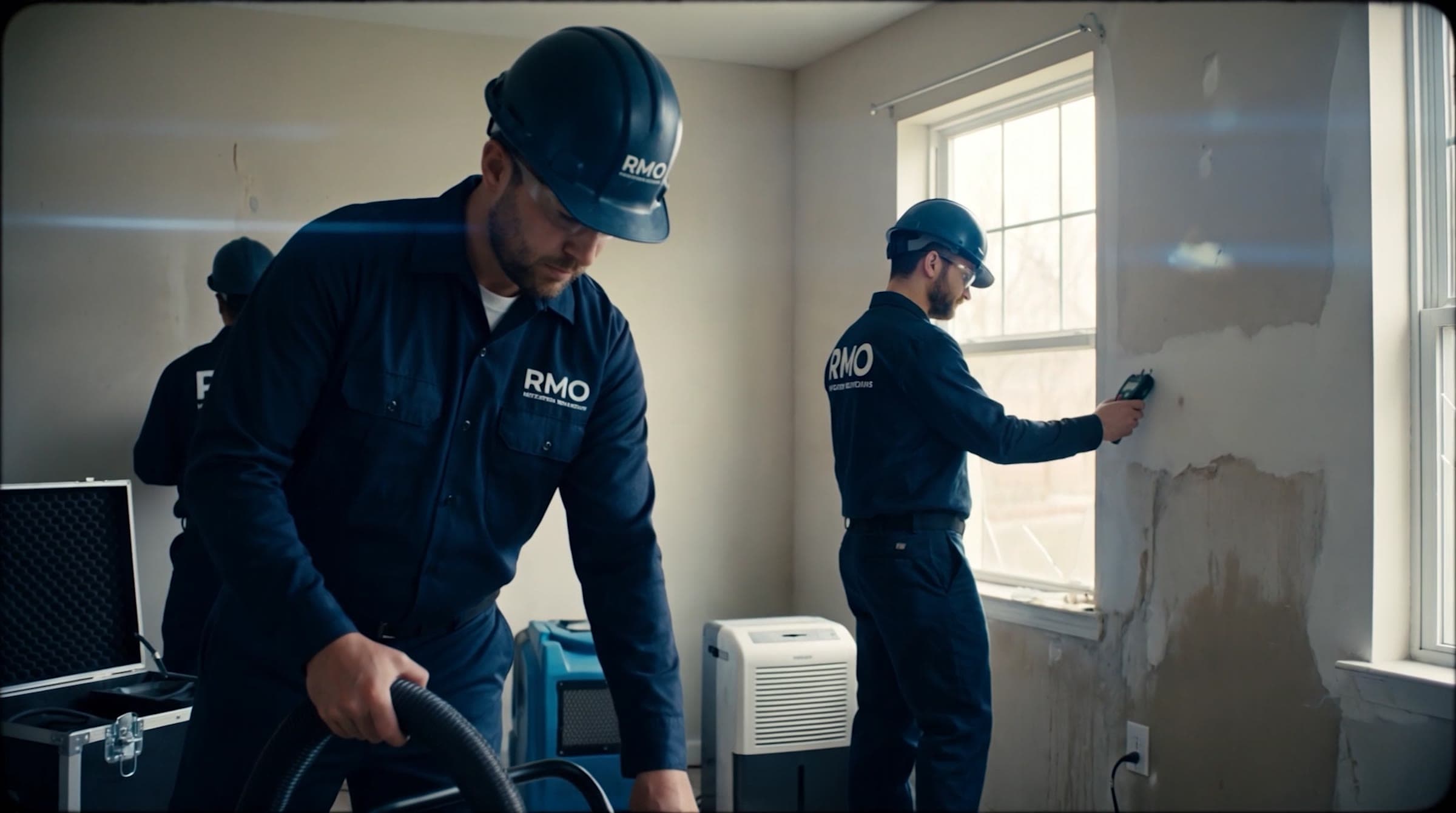
Once the source is stopped and the category is known, we extract standing water and remove what can't be saved, such as saturated ceiling tile, carpet pad or drywall touched by contaminated water. Commercial dehumidifiers and air movers are then set to a written drying plan. A technician records readings against the drying goal for each material daily, adjusts the equipment and reports progress to your facility contact.
When the readings reach their goals, the same team moves into repairs: drywall, ceilings, flooring and paint. You keep one schedule, one point of contact and one file for your carrier from the first extraction to the final walkthrough.
Water category set before work starts
We classify the water as Category 1, 2 or 3 under ANSI/IICRC S500, and the safety steps and removal decisions follow from it.
Phased around your business
Drying can run section by section, with noisy work after hours, so occupied floors keep working.
What commercial water damage restoration includes
Inspection and water category
Source, extent and category are recorded before work begins, so safety precautions and removal decisions are on paper.
Extraction
Standing water is pulled from carpet, hard floors, basements and lower levels before it spreads further.
Controlled demolition
Only materials that can't be dried or are contaminated come out, with flood cuts kept as low as the readings allow.
Structural drying
Commercial dehumidifiers, air movers and, where suited, wall-cavity drying systems dry the building in place.
Antimicrobial treatment
Affected framing and surfaces are treated to limit microbial growth while they dry.
Contents protection
Furniture, files and equipment are moved, set on blocks or packed out to keep them away from the water.
Daily monitoring
Readings, equipment counts and adjustments are logged every day until each material reaches its drying goal.
Repairs and rebuild
Drywall, ceilings, flooring and finishes are restored by the team that dried the building.
Signs your building needs a water damage crew
- Stained or sagging ceiling tiles
- Wet carpet along walls or under workstations
- A musty odor in a room that was fine last week
- Bubbling paint or swollen baseboards
- Water on the floor below a restroom, kitchen or mechanical room
- A recent sprinkler, roof or pipe leak, even a small one
From your call to the last repair
One phone number and one accountable team, from the emergency to the finished repair.
Call us, day or night
A person answers 248-845-0000 at any hour and asks a few quick questions, so the right crew and equipment roll.
On site in about 60 minutes
Across Metro Detroit, an IICRC-certified crew arrives, finds the source and makes the property safe.
Mitigate and document
We stop the damage, extract and dry, and record photos and moisture readings your insurer can use.
Restore and rebuild
Once everything is dry and clean, the same team handles the repairs, from drywall and flooring to finishes.
Why property managers choose RMO for water losses
Drying measured, not guessed
Daily readings against written goals show when each area is dry, which avoids both hidden moisture and needless tear-out.
Planned for occupied buildings
Containment, equipment placement and noisy work are planned around tenants, so a leak on one floor doesn't close the whole building.
Mitigation through rebuild
There is no gap between the drying contractor and the repair contractor, because they are the same company working from the same file.
We will work with your insurance
We will work with any insurance carrier you use. We’ve done it on claim after claim, and we take pride in it: every job is documented from the first hour and priced line by line, and we work hard so your insurance covers the whole project.
Many of our clients have saved thousands of dollars this way, and many paid nothing beyond their deductible.
How we help with insurance claims








Examples of carriers our customers use. RMO is an independent company and isn’t affiliated with or endorsed by these insurers.
Questions people ask us
Don’t see yours? A person answers 248-845-0000 around the clock.
How long does drying a commercial space take?
Several days is typical, but it depends on the materials, the water category and how much of the building is affected. Concrete, hardwood and layered walls take longer than drywall and carpet. We set drying goals on the first day and share readings daily, so you can see progress instead of guessing.
Can our business stay open while you work?
Often, yes. Containment, careful equipment placement and after-hours scheduling let many businesses keep unaffected areas in use. If part of the building must close for safety, such as during Category 3 cleanup, we tell you which areas and give you an expected timeline.
Will insurance pay for commercial water damage?
That depends on your policy and the cause of the loss, and the decision belongs to your carrier. What we can do is give your adjuster the evidence: photos, moisture readings, drying logs and an itemized scope, shared directly with them throughout the job.
Do you also handle the repairs?
Yes. RMO handles mitigation through rebuild, so the drywall, ceilings, flooring and finishes removed during drying are put back by the same team. Your property team keeps one schedule and one contact.
We will restore your property

Related services
All commercial services- Water Extraction & Structural DryingHigh-volume water removal and measured drying that saves building materials and helps shorten downtime.
- Mold Damage RestorationContained mold removal for commercial buildings, with the moisture source addressed and independent clearance testing when appropriate.
- Commercial ReconstructionDrywall, framing, ceilings, flooring and finishes rebuilt by the team that handled the mitigation, phased around your operations.
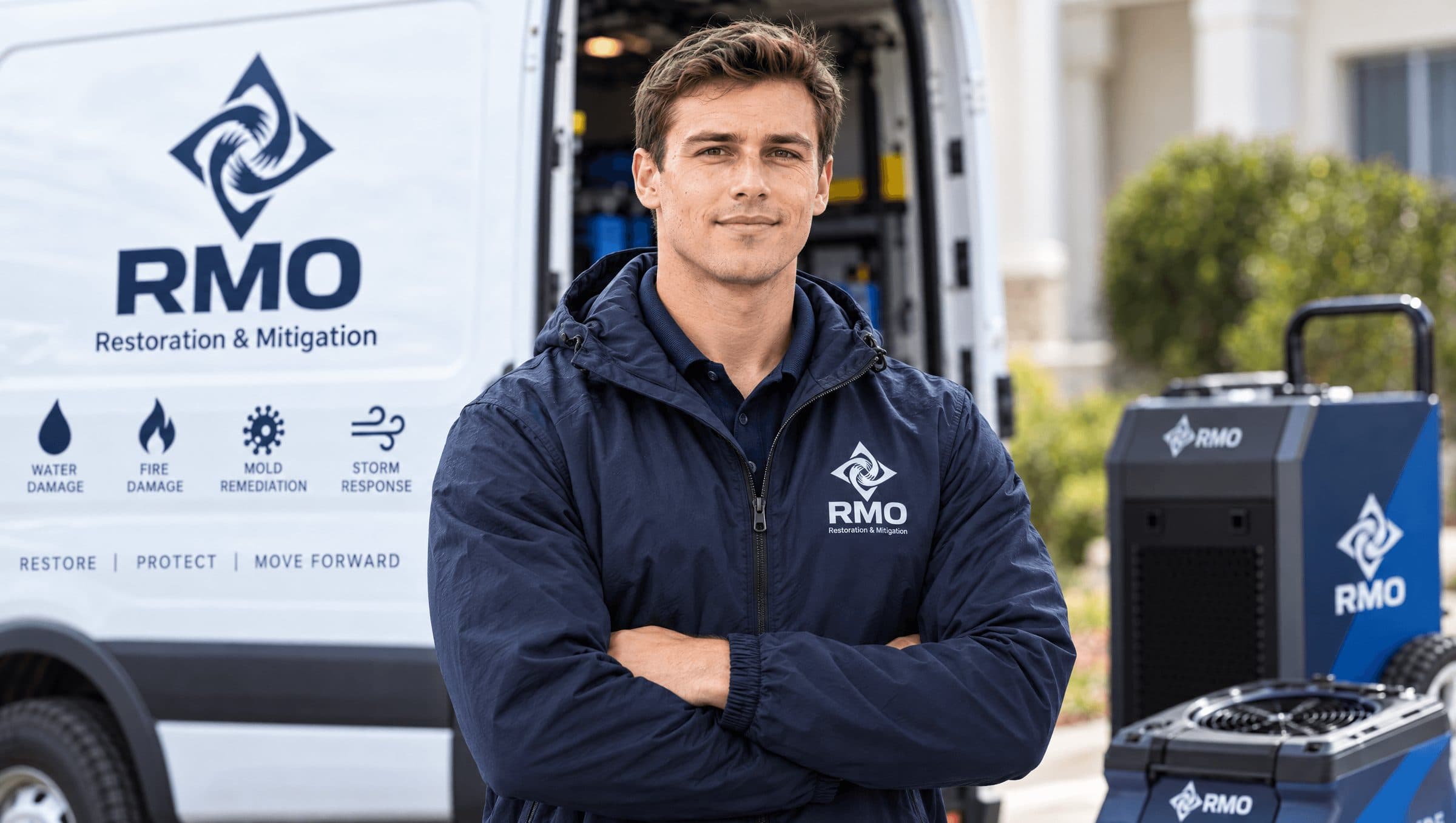
Request a call and we’ll contact you soon
Leave your name and number and a coordinator will call you back. If water is still coming in, or there’s smoke or sewage, call now.
Call 24/7248-845-0000- A person answers 24/7
- On site in about 60 minutes
- We work with your insurer
Your details
Only your name and phone number are required.