Sewage backup cleanup for commercial buildings in Metro Detroit
Sewage is Category 3 water: unsanitary, and unsafe to handle without protection. Keep staff, tenants and customers away from it and call 248-845-0000, and RMO's IICRC-certified technicians will remove it, take out what can't be saved and disinfect the area so it can be used again.
24-hour emergency hotline248-845-0000A person answers, day or nightHow we clean up a commercial sewage backup
In commercial buildings, sewage tends to appear where it does the most harm: floor drains in a lower level, ground-floor restrooms, a restaurant kitchen or a tenant's storage room. The cause may be a blocked main, a failed ejector pump, a municipal sewer that surcharges during a heavy storm or an overflowing fixture on the floor above. Whatever the source, ANSI/IICRC S500 treats it as Category 3 water, and that sets how the cleanup must be done.
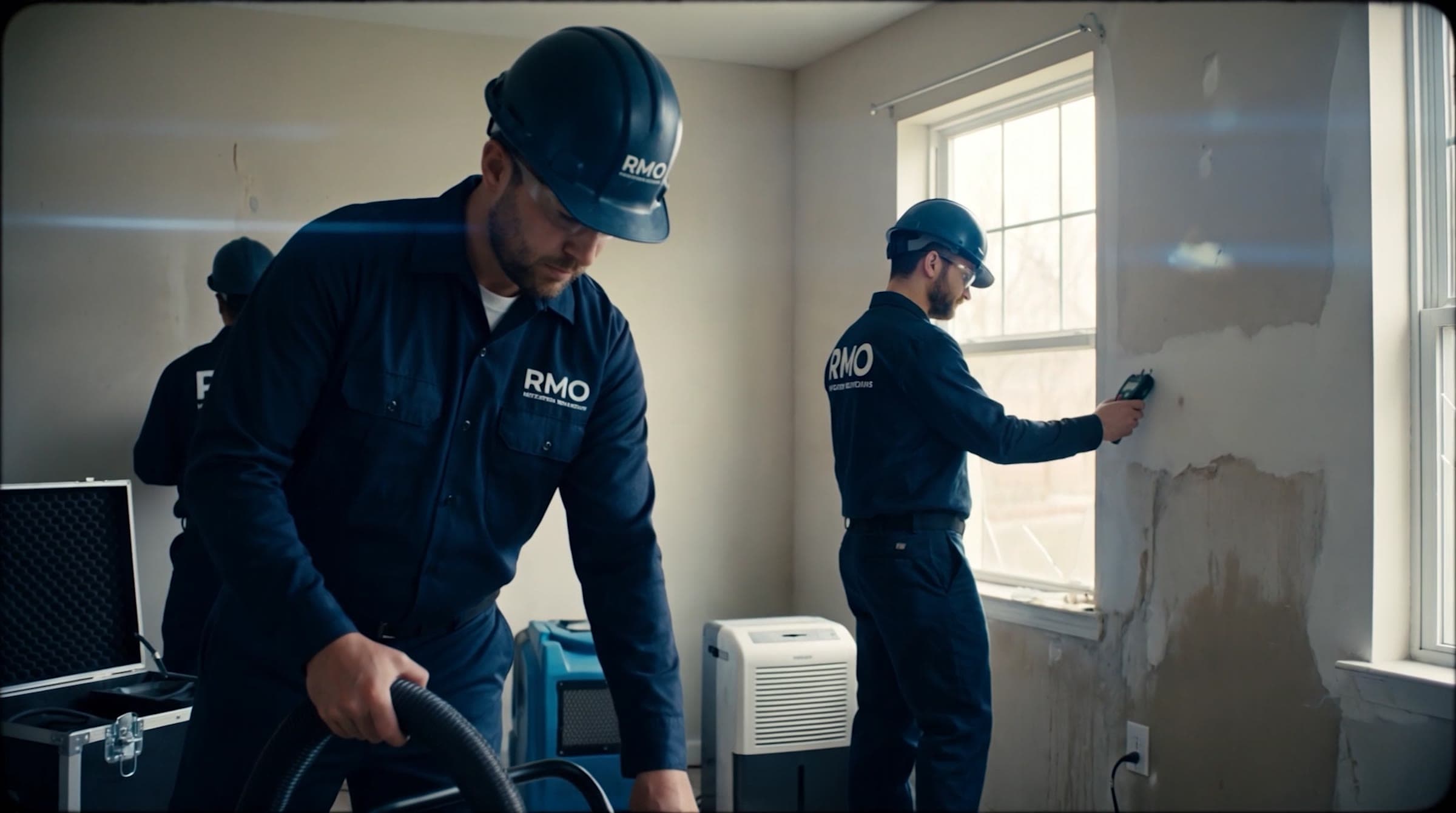
Our crews isolate the area, set up containment and, where needed, negative air to keep odor and aerosols out of the rest of the building. We extract the sewage, remove porous materials that absorbed it, clean hard surfaces and then disinfect them with EPA-registered products left on for their label contact time. The area is then dried to measured goals and treated for odor.
We work with your plumber or building engineer so the cause is fixed before we finish, and we document the loss for your carrier with photos, readings and an itemized scope. When the area is clean and dry, our rebuild team replaces the drywall, flooring and finishes that had to come out.
Handled as Category 3
Crews wear protective equipment, contain the area and treat everything the sewage touched as contaminated.
Porous materials removed
Carpet, pad, ceiling tile and drywall that absorbed sewage are bagged and removed, not cleaned and left in place.
What commercial sewage cleanup includes
Safety and containment
The area is isolated, HVAC returns are sealed where needed and access is limited to crew in protective equipment.
Sewage extraction
Pumps and extractors remove sewage and contaminated water from floors, drains and lower levels.
Removal of porous materials
Carpet, pad, ceiling tile, insulation and drywall below the cut line are bagged and disposed of.
Cleaning, then disinfection
Hard surfaces, framing and fixtures are cleaned before they are disinfected, because disinfectant can't work through soil left on a surface.
Structural drying
Dehumidifiers and air movers dry the structure to measured goals once contaminated materials are out.
Odor control
HEPA air scrubbers and treatments such as hydroxyl generators address odor that lingers after cleaning.
Documentation and rebuild
Photos, readings and an itemized scope go to your adjuster, and our team restores what was removed.
Signs of a sewage problem
- Water rising from floor drains or toilets
- Sewage odor in a lower level or restroom
- Gurgling drains or slow fixtures across the building
- Dark, foul water after a heavy storm
- Wet floors around an ejector or sump pit
From your call to the last repair
One phone number and one accountable team, from the emergency to the finished repair.
Call us, day or night
A person answers 248-845-0000 at any hour and asks a few quick questions, so the right crew and equipment roll.
On site in about 60 minutes
Across Metro Detroit, an IICRC-certified crew arrives, finds the source and makes the property safe.
Mitigate and document
We stop the damage, extract and dry, and record photos and moisture readings your insurer can use.
Restore and rebuild
Once everything is dry and clean, the same team handles the repairs, from drywall and flooring to finishes.
Why facility managers call RMO for sewage
Protection for your people
We isolate the area and control airflow so staff and tenants stay clear of contaminated water and odor while we work.
Removal decisions by the standard
What comes out and what can be cleaned follows ANSI/IICRC S500, and the reasons are written into the scope for your adjuster.
Cleanup through rebuild
After disinfection and drying, the same team replaces what was removed, so restrooms, kitchens and storage areas return to service sooner.
We will work with your insurance
We will work with any insurance carrier you use. We’ve done it on claim after claim, and we take pride in it: every job is documented from the first hour and priced line by line, and we work hard so your insurance covers the whole project.
Many of our clients have saved thousands of dollars this way, and many paid nothing beyond their deductible.
How we help with insurance claims








Examples of carriers our customers use. RMO is an independent company and isn’t affiliated with or endorsed by these insurers.
Questions people ask us
Don’t see yours? A person answers 248-845-0000 around the clock.
How dangerous is sewage water?
Treat it as unsanitary. Sewage is Category 3 water and can carry bacteria, viruses and other contaminants, so keep people and pets out of the area and don't mop it up without protective equipment. Anyone who touches it should wash thoroughly.
Can sewage-soaked carpet be cleaned?
In most cases, no. ANSI/IICRC S500 calls for removing porous materials such as carpet and pad that absorbed Category 3 water, because they can't be reliably decontaminated. Hard surfaces such as tile, sealed concrete and metal can usually be cleaned and disinfected.
What extra steps apply to restaurants and food service?
If sewage reached a kitchen or food storage area, stop food service in the affected area and contact your local health department, as food safety rules require. Discard any food and packaging the water touched. We document the cleanup so you have a record to show the inspector.
Does insurance cover a sewage backup?
It depends on your policy. Sewer and drain backup is often a separate endorsement on commercial property policies, so check with your agent or carrier. Either way, we work directly with adjusters and provide photos, readings and an itemized scope.
We will restore your property

Related services
All commercial services- Biohazard CleanupDiscreet cleanup of blood, bodily fluids, sharps and other biological contamination in commercial and public buildings.
- Water Extraction & Structural DryingHigh-volume water removal and measured drying that saves building materials and helps shorten downtime.
- Commercial ReconstructionDrywall, framing, ceilings, flooring and finishes rebuilt by the team that handled the mitigation, phased around your operations.
Request a call and we’ll contact you soon
Leave your name and number and a coordinator will call you back. If water is still coming in, or there’s smoke or sewage, call now.
Call 24/7248-845-0000- A person answers 24/7
- On site in about 60 minutes
- We work with your insurer
Your details
Only your name and phone number are required.