
Our restoration process, from first call to final walkthrough
Every job follows the same order, whether it's a wet basement or a smoke-damaged office building. Here is what happens at each step and what you'll see from us along the way.
24-hour emergency hotline248-845-0000A person answers, day or nightTen steps from emergency to finished repair
- 01
You call
Your call is answered by a person, day or night. We ask what happened, whether everyone is safe and whether the source has stopped, and we tell you what you can safely do while the crew is on the way.
- 02
A crew arrives in about 60 minutes
Across Metro Detroit, an RMO crew is on site in about 60 minutes, with extraction and drying equipment on the truck.
- 03
Assessment
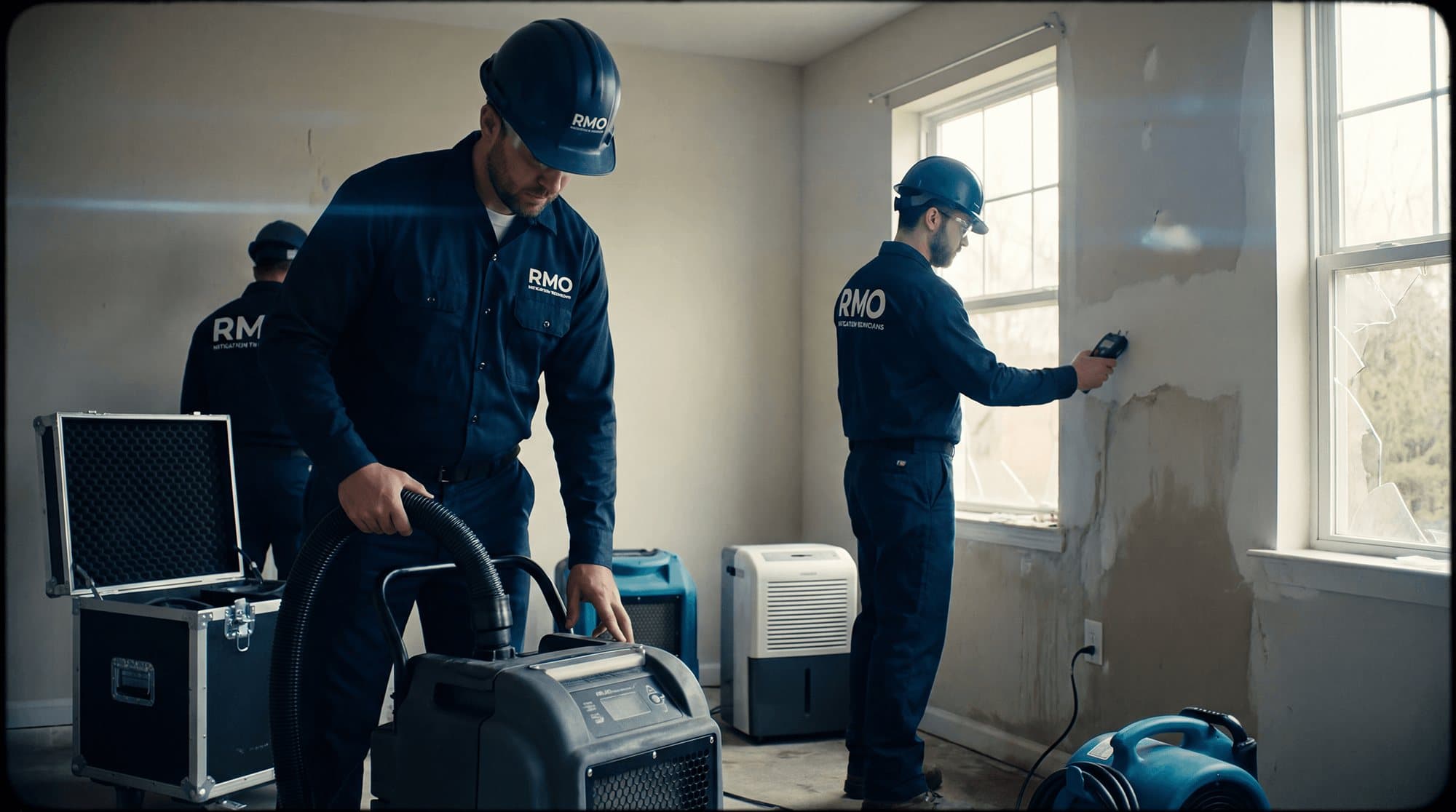
The crew lead walks the property with you, checks for hazards and maps the moisture with meters and thermal imaging. We identify the water category or the type of smoke residue and explain the plan before work begins.
- 04
Stabilize and stop the source
Water is shut off, roof openings are tarped and broken windows or doors are boarded up. Contents in the path of the damage are moved or set up on blocks.
- 05
Extraction and removal
Standing water is extracted. Materials that can't be saved, such as soaked carpet pad, sewage-contaminated flooring or swollen drywall, are photographed, cut out and removed.
- 06
Drying and monitoring
Air movers and commercial dehumidifiers go in, placed for the room and the materials. We take readings every day, adjust the equipment and keep drying until materials reach the goals set at the start.
- 07
Cleaning and treatment
Surfaces are cleaned, and areas touched by contaminated water are treated with an antimicrobial. Smoke residue is cleaned according to soot type, and odor is treated with HEPA air scrubbers, thermal fogging or hydroxyl generators as the job requires.
- 08
Documentation and insurance
Photos, moisture readings, drying logs and an itemized scope are kept from the first day. We share them with your adjuster and answer questions about the work.
- 09
Repairs and rebuild
Once the structure is dry and the repair scope is agreed, we rebuild: drywall, insulation, flooring, cabinets, trim and paint. Permits are pulled when the work requires them.
- 10
Final walkthrough
We walk the finished work with you and check it against the scope. Anything that still needs attention is written down and finished before the job closes.
How the process changes with the damage
The order stays the same. The methods change with what caused the damage.
Clean water
Many materials soaked by clean water from a supply line (Category 1) can be dried in place when work starts early. Drying is confirmed with readings, not judged by touch.
Sewage and Category 3 water
The area is contained and crews wear protective gear. Porous materials that soaked up sewage are removed, and everything that stays is cleaned and treated.
Fire and smoke
Work starts only after the fire department releases the building. Openings are boarded up, contents may be packed out for cleaning, and soot is identified before cleaning begins.
Mold
Containment and negative air come first. Growth is removed at the source, and the moisture that fed it is tracked down and corrected.
Questions about the process
How long does drying take?
It depends on the materials, how long they were wet and the conditions in the building. We set drying goals on the first day and check readings daily, so you can see progress in numbers. Equipment comes out when the readings show the materials are dry.
Can we stay in the building during the work?
Often, yes, if the affected area can be closed off and the job doesn't involve sewage, mold or heavy smoke residue in living or working spaces. Drying equipment runs day and night and is loud. If staying isn't a good idea, we'll tell you plainly.
Do I need to be there the whole time?
No. We need you, or someone you trust, at the start to walk the property and approve the plan, and again at the final walkthrough. In between, we'll arrange access with you and keep you updated.
We will restore your property

Request a call and we’ll contact you soon
Leave your name and number and a coordinator will call you back. If water is still coming in, or there’s smoke or sewage, call now.
Call 24/7248-845-0000- A person answers 24/7
- On site in about 60 minutes
- We work with your insurer
Your details
Only your name and phone number are required.