
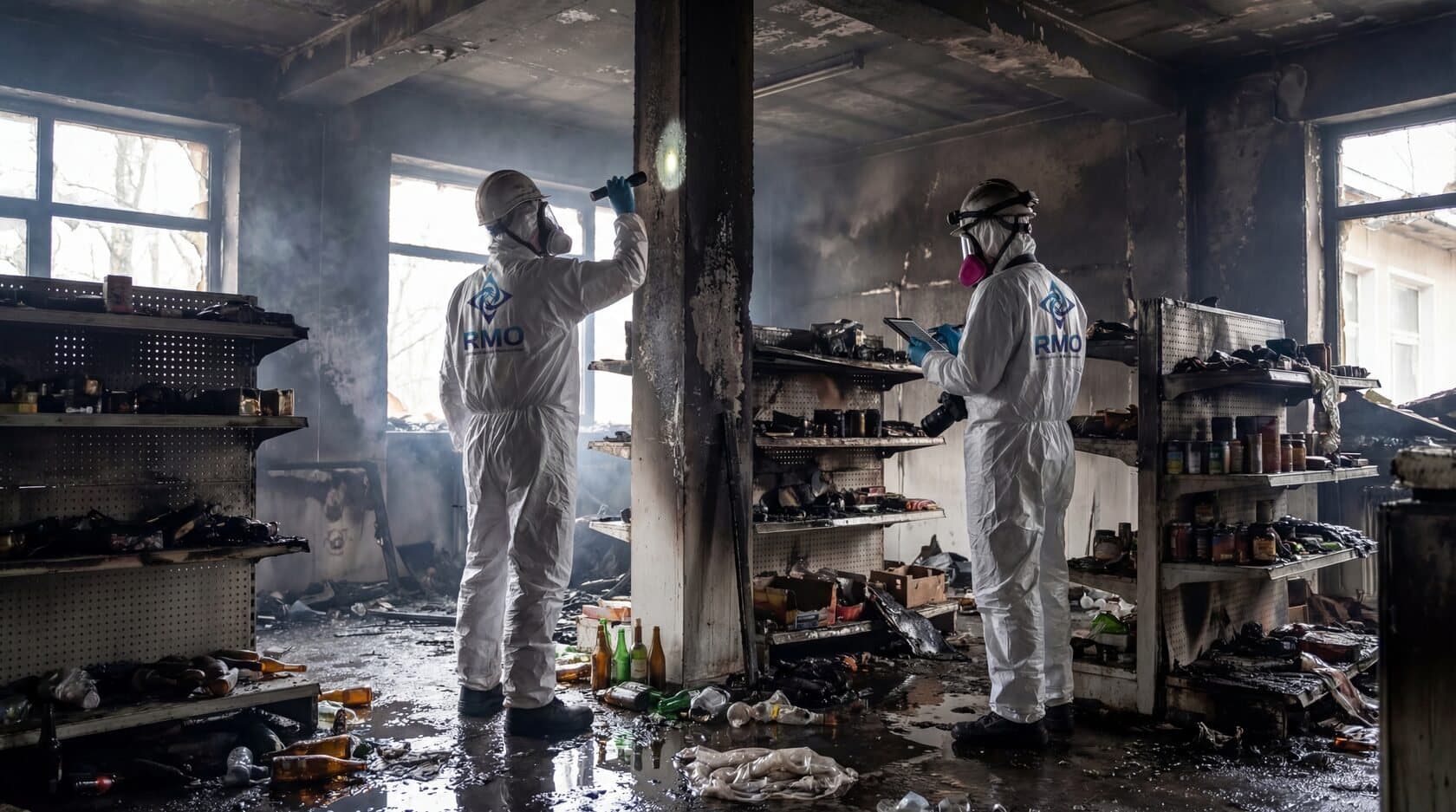
Keeping damaged buildings safe for crews and occupants
Damaged buildings hide hazards: live wiring near water, sagging ceilings, contaminated water and airborne dust. Our crews check for them before work starts and keep them under control until the job is done.
24-hour emergency hotline248-845-0000A person answers, day or nightLook first, then work
Our crews arrive in about 60 minutes across Metro Detroit, and the first thing they do is look. Before equipment comes off the truck, the crew lead walks the property, checks for hazards and decides what has to be made safe first. If a hazard can't be controlled, work waits until it can be, even if that means waiting for the utility company or the fire department.
Our safety practices are aligned with OSHA requirements, which in Michigan are enforced through MIOSHA, the state's workplace safety program. They cover protective equipment, electrical safety, hazard communication for chemical products and the training crews need for each.
Hazards we check for
Electricity and water
Water near outlets, panels, appliances and extension cords. Power to wet areas is shut off at the panel only when the panel can be reached safely, and drying equipment runs on ground-fault protected circuits or cords.
Slips and trips
Wet floors, debris and equipment cords. Cords are run along walls, walkways are kept clear and wet floors are marked.
Structural damage
Sagging ceilings, saturated drywall, soft floors and fire-damaged framing. Nobody enters a burned building until the fire department has cleared it, and unsafe areas are closed off.
Contaminated water
Sewage and other Category 3 water is unsanitary. Crews wear protective gear, and people and pets are kept out of the area until it has been cleaned and treated.
Mold
Visible mold is left undisturbed until containment is up, because handling it can spread spores to the rest of the building.
Air quality
Demolition dust, soot and mold spores travel on air currents and through heating and cooling ducts. Vents in the work area are sealed, or the system is shut down when needed, and HEPA air scrubbers run while the work goes on.
Older building materials
Many Metro Detroit buildings predate today's limits on asbestos and lead paint. Suspect materials are tested before they're disturbed, and if testing finds either one, it's removed under containment by licensed abatement partners we've worked with for years, coordinated by RMO as part of your job.
Protecting the people in the building
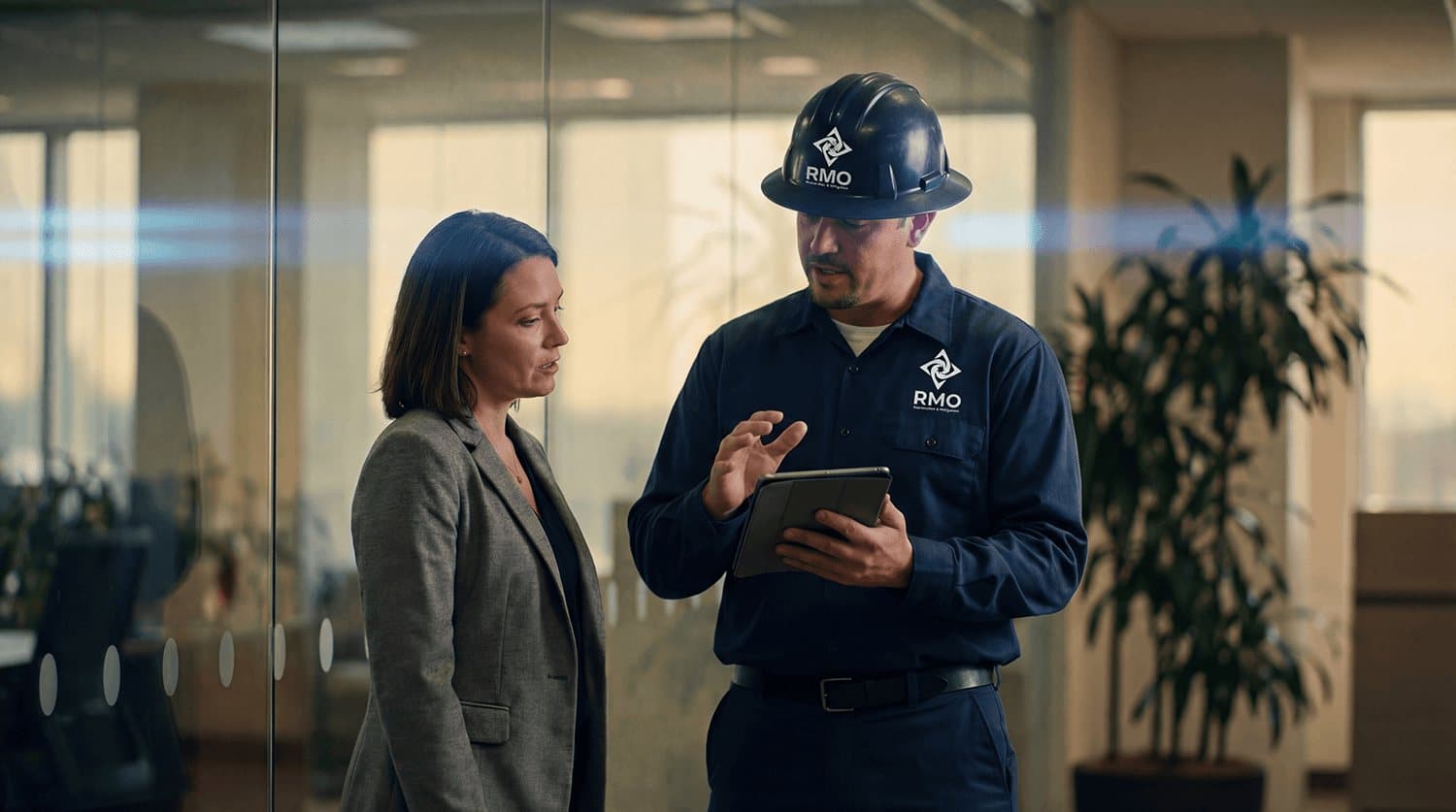
Many jobs happen in occupied homes, offices and facilities. These steps keep the work, and what it stirs up, inside the work area.
- Plastic containment walls and zipper doors around dusty or contaminated work
- HEPA air scrubbers, plus negative air pressure where mold, sewage or demolition dust is involved
- Floor protection and clear paths to exits
- Work areas marked and closed to occupants
- Children, older adults and pets kept away from contaminated areas
- Safety data sheets for the products we use, available on request
- Equipment and cords kept clear of doorways and stairs
Protective equipment matched to the job
Clean water from a supply line calls for gloves, boots and eye protection. Sewage, mold and fire residue add respirators and disposable suits. Crews are trained to put this equipment on, use it and take it off correctly, so contamination stays in the work area instead of traveling through the building on clothing and tools.
We will restore your property

Request a call and we’ll contact you soon
Leave your name and number and a coordinator will call you back. If water is still coming in, or there’s smoke or sewage, call now.
Call 24/7248-845-0000- A person answers 24/7
- On site in about 60 minutes
- We work with your insurer
Your details
Only your name and phone number are required.