
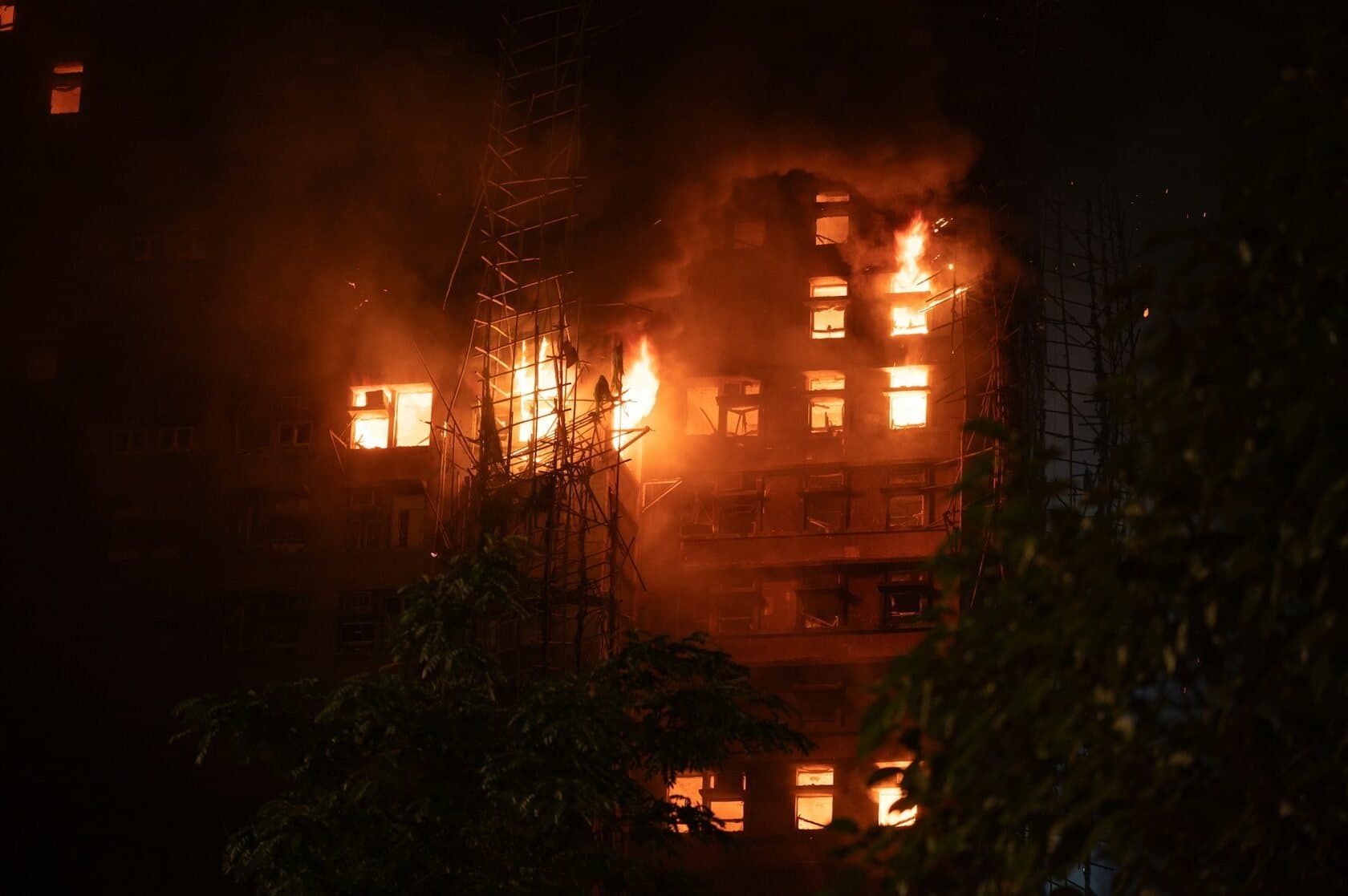
Fire and smoke restoration for commercial buildings in Metro Detroit
Once the fire department releases your building, RMO secures it, removes soot and smoke odor, and rebuilds what burned. Our IICRC-certified team works to the ANSI/IICRC S700 standard and keeps your adjuster supplied with documentation from the first day.
24-hour emergency hotline248-845-0000A person answers, day or nightFrom fire scene to reopened business
A commercial fire damages far more than the burned area. Smoke travels through ceiling plenums, stairwells and ductwork and leaves residue rooms or floors away. Firefighting water soaks walls and floors. Soot from burning plastics is acidic, and when it is left on metal, glass and electronics it starts to corrode and etch them.
Our first job is to stabilize the property with board-up and tarping, water extraction, and HEPA air filtration to capture airborne soot. Then we identify the residues, map how far smoke traveled and write a scope that separates what can be cleaned from what must be replaced. Cleaning runs from the top down, ceilings and walls before floors. Odor treatment such as thermal fogging or hydroxyl generators follows once the residue is gone.
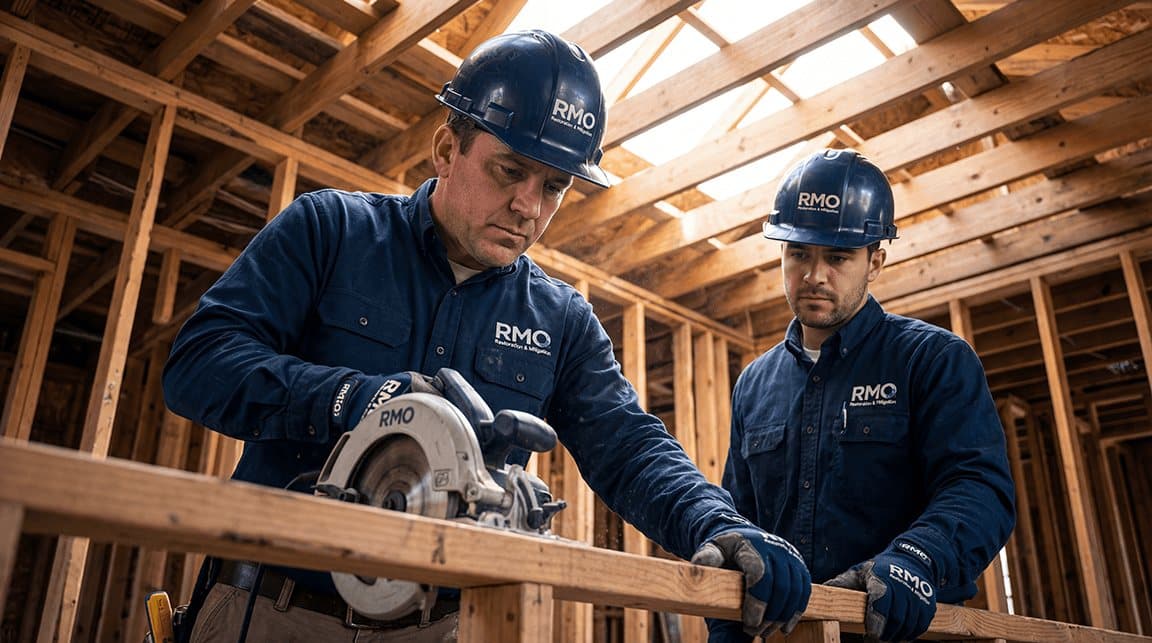
Contents such as files, furniture, inventory and equipment are cleaned on site or packed out, inventoried and returned. When cleaning is complete, our rebuild team replaces framing, insulation, drywall, ceilings and finishes, so your business deals with one contractor from board-up to reopening.
Secured first
Board-up, roof tarping and water removal protect the building from weather, trespass and further damage before cleaning begins.
Residue identified before cleaning
Dry, oily and protein residues each need a different method, so we identify the soot before choosing how to remove it.
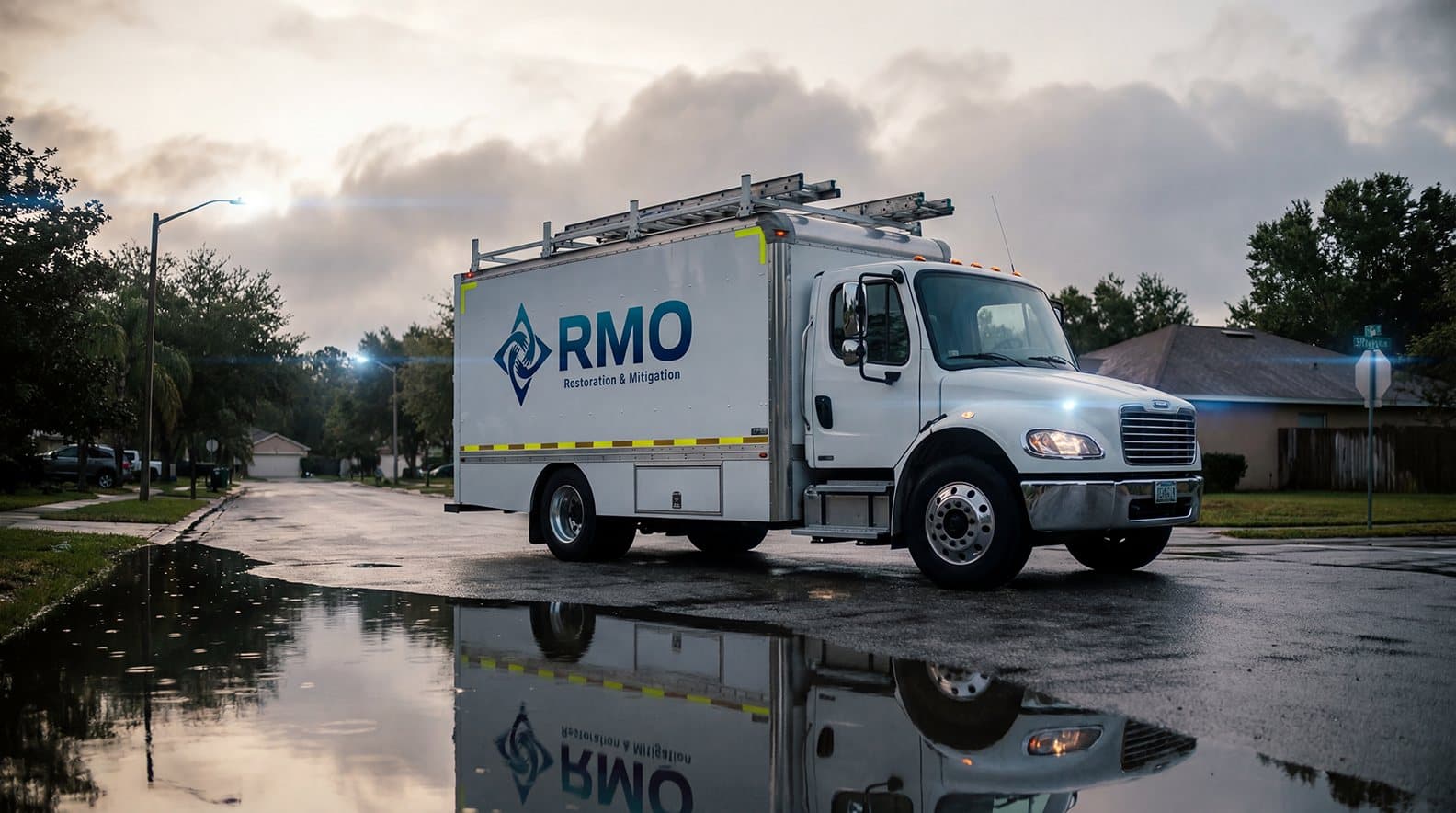
What fire and smoke restoration includes
Board-up and site security
Openings are secured and damaged areas closed off to protect the building and the public.
Water removal after firefighting
Water from hoses and sprinklers is extracted and the structure dried before it causes secondary damage.
Residue testing and smoke mapping
We identify soot types and trace how far smoke reached, including concealed spaces and ductwork.
Soot removal and structural cleaning
HEPA vacuuming, dry soot sponges and wet cleaning remove residue from ceilings, walls, structure and fixtures.
Odor treatment
Thermal fogging, hydroxyl generators and sealing of cleaned surfaces deal with odor at its source, not just in the air.
Contents cleaning and pack-out
Files, furniture, inventory and equipment are cleaned in place or inventoried, packed out and returned.
HVAC and electronics coordination
Smoke-affected ductwork and equipment are cleaned or flagged for replacement, working with your technicians.
Reconstruction
Burned framing, drywall, insulation, ceilings and finishes are rebuilt by the same company.
When to call after a commercial fire
- The fire department has released the building
- Soot on walls, ceilings or light fixtures
- Smoke odor in areas the fire never reached
- Water damage from hoses or sprinklers
- Broken windows or a damaged roof
- Residue on equipment, inventory or electronics
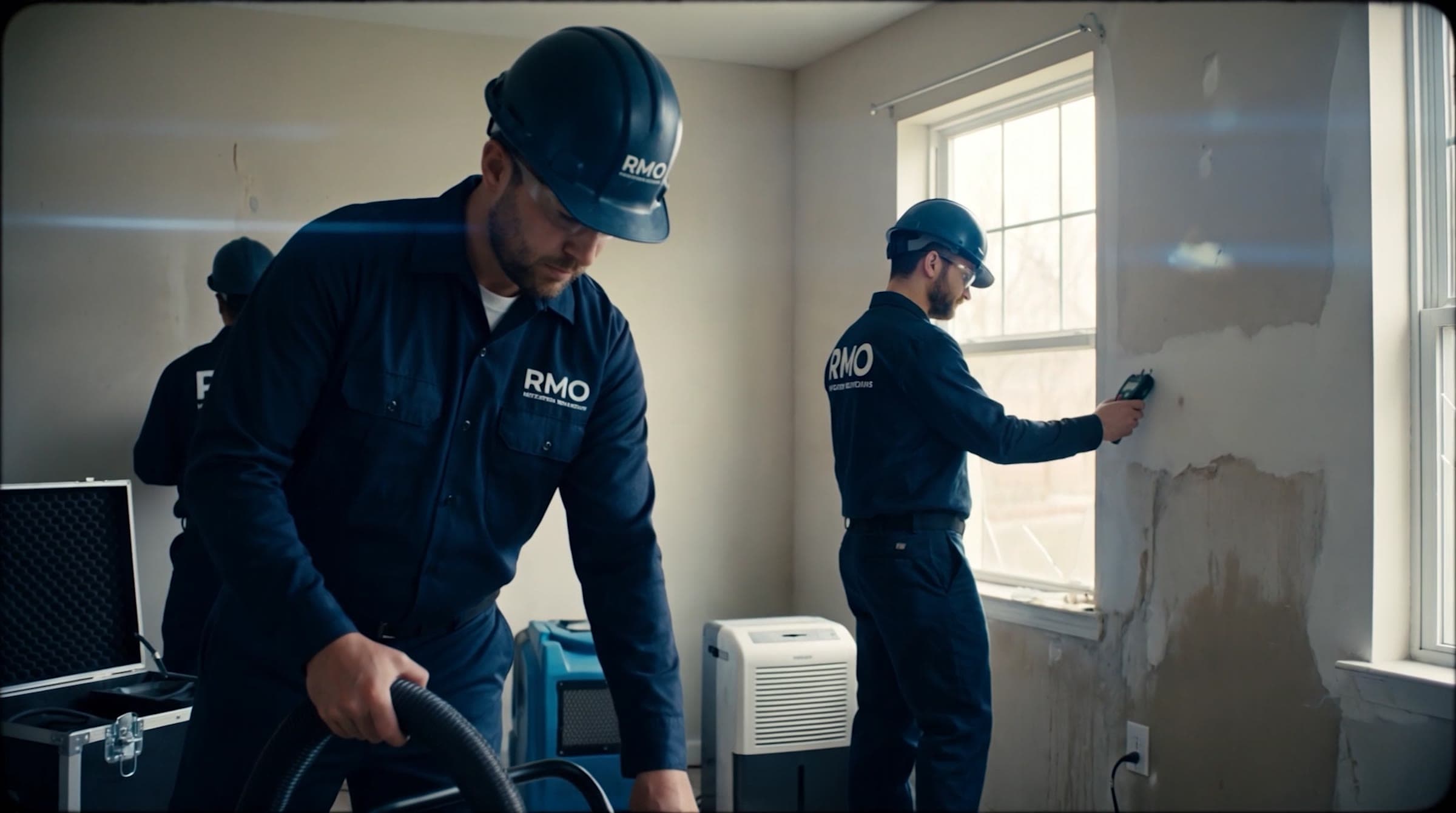
From your call to the last repair
One phone number and one accountable team, from the emergency to the finished repair.
Call us, day or night
A person answers 248-845-0000 at any hour and asks a few quick questions, so the right crew and equipment roll.
On site in about 60 minutes
Across Metro Detroit, an IICRC-certified crew arrives, finds the source and makes the property safe.
Mitigate and document
We stop the damage, extract and dry, and record photos and moisture readings your insurer can use.
Restore and rebuild
Once everything is dry and clean, the same team handles the repairs, from drywall and flooring to finishes.
Why businesses choose RMO after a fire
Fire, water and smoke in one plan
Most fires leave all three kinds of damage. One IICRC-certified team handles the extraction, the soot and the odor together.
Clean first, replace when needed
We test residues and clean before recommending replacement, and the scope lists both so your adjuster can follow the reasoning.
Board-up to reopening
The team that secures your building also rebuilds it, so your schedule doesn't stall while one contractor hands off to the next.
We will work with your insurance
We will work with any insurance carrier you use. We’ve done it on claim after claim, and we take pride in it: every job is documented from the first hour and priced line by line, and we work hard so your insurance covers the whole project.
Many of our clients have saved thousands of dollars this way, and many paid nothing beyond their deductible.
How we help with insurance claims








Examples of carriers our customers use. RMO is an independent company and isn’t affiliated with or endorsed by these insurers.
Questions people ask us
Don’t see yours? A person answers 248-845-0000 around the clock.
How soon can you start after a fire?
As soon as the fire department releases the building. Please don't go in before they clear it. Our first steps are securing openings, removing water and starting air filtration, so soot does less damage while the scope is written.
Can smoke-damaged equipment and inventory be saved?
Often, especially when cleaning starts quickly. Hard surfaces, metal and many electronics clean well, while porous goods and any food, medicine or cosmetics exposed to smoke are usually discarded. We test, clean and document each category so the decision is clear to you and your insurer.
How do you remove smoke odor from a commercial building?
By removing the residue first and treating the structure and air second. Soot is cleaned from every affected surface, thermal fogging or hydroxyl generators neutralize remaining odor, and cleaned framing can be sealed before the rebuild. Fragrance alone only covers the problem.
Do you work with our insurance adjuster?
Yes. We work directly with carriers and adjusters and provide photos, residue findings, an itemized scope and contents inventories. Your carrier decides coverage; our job is to keep the record complete and accurate.
We will restore your property

Related services
All commercial services- HVAC & Air Duct CleaningPost-loss cleaning of ductwork and air-handling components contaminated by smoke, soot, water or mold.
- Electronics RestorationStabilizing, cleaning and documenting electronics exposed to water, smoke or soot, in coordination with your IT team.
- Commercial ReconstructionDrywall, framing, ceilings, flooring and finishes rebuilt by the team that handled the mitigation, phased around your operations.
Request a call and we’ll contact you soon
Leave your name and number and a coordinator will call you back. If water is still coming in, or there’s smoke or sewage, call now.
Call 24/7248-845-0000- A person answers 24/7
- On site in about 60 minutes
- We work with your insurer
Your details
Only your name and phone number are required.