
Structural drying for water-damaged homes in Metro Detroit
If your home got wet, the water you can't see does the lasting damage. Call 248-845-0000: we set measured drying goals, check walls, floors and framing every day, and remove the equipment only when the readings say they're dry.
24-hour emergency hotline248-845-0000A person answers, day or nightHow structural drying works, and why touch isn't enough
If our equipment is running in your home, leave it on, keep windows and doors closed unless we ask otherwise, and keep the thermostat where the technician set it. Switching machines off overnight, or opening windows on a humid Michigan summer day, lets moisture back in and can add days to the job.
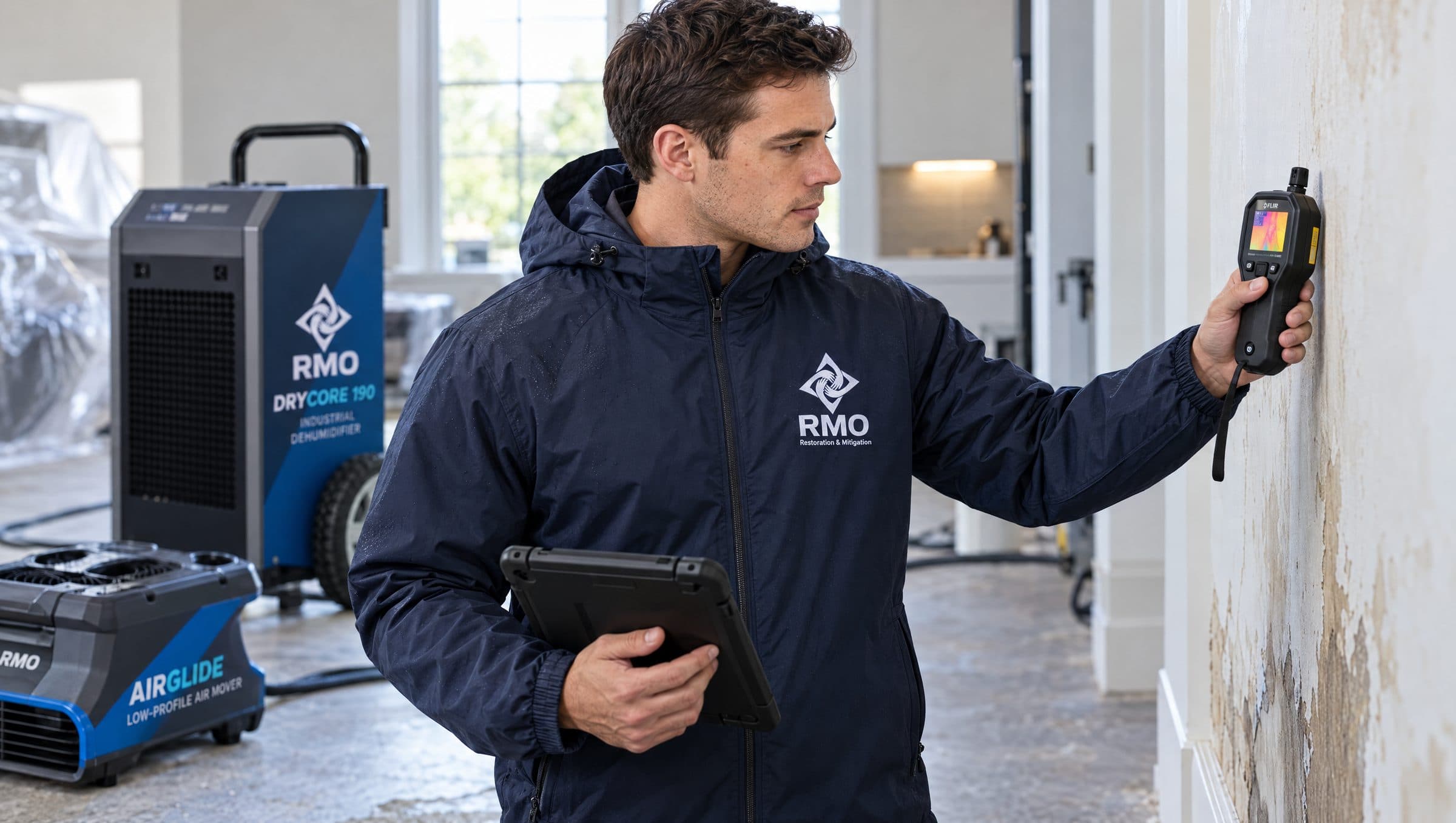
Drywall can feel dry while its gypsum core, the wood plate behind it and the insulation inside the wall still hold water. Hardwood, subfloor and concrete hold moisture well below the surface. That's why we rely on instruments: pin meters for readings at depth, non-invasive meters for scanning large areas, a thermal camera to spot cool, wet zones and a hygrometer for the air.
Each day we compare the readings with the drying goal, adjust the air movers and dehumidifiers, and log the results. Many homes dry in about three to five days with the right equipment, but every house is different, and the meters decide when we're done, not the calendar. The process follows the ANSI/IICRC S500 standard, and the logs give your adjuster a day-by-day record.
Drying goals you can check
We measure dry materials elsewhere in your home and use them as the target for each wet wall, floor and cabinet.
Readings every day
A technician checks moisture and humidity daily, moves equipment where it's needed and writes the results down.
What our structural drying includes
Moisture inspection
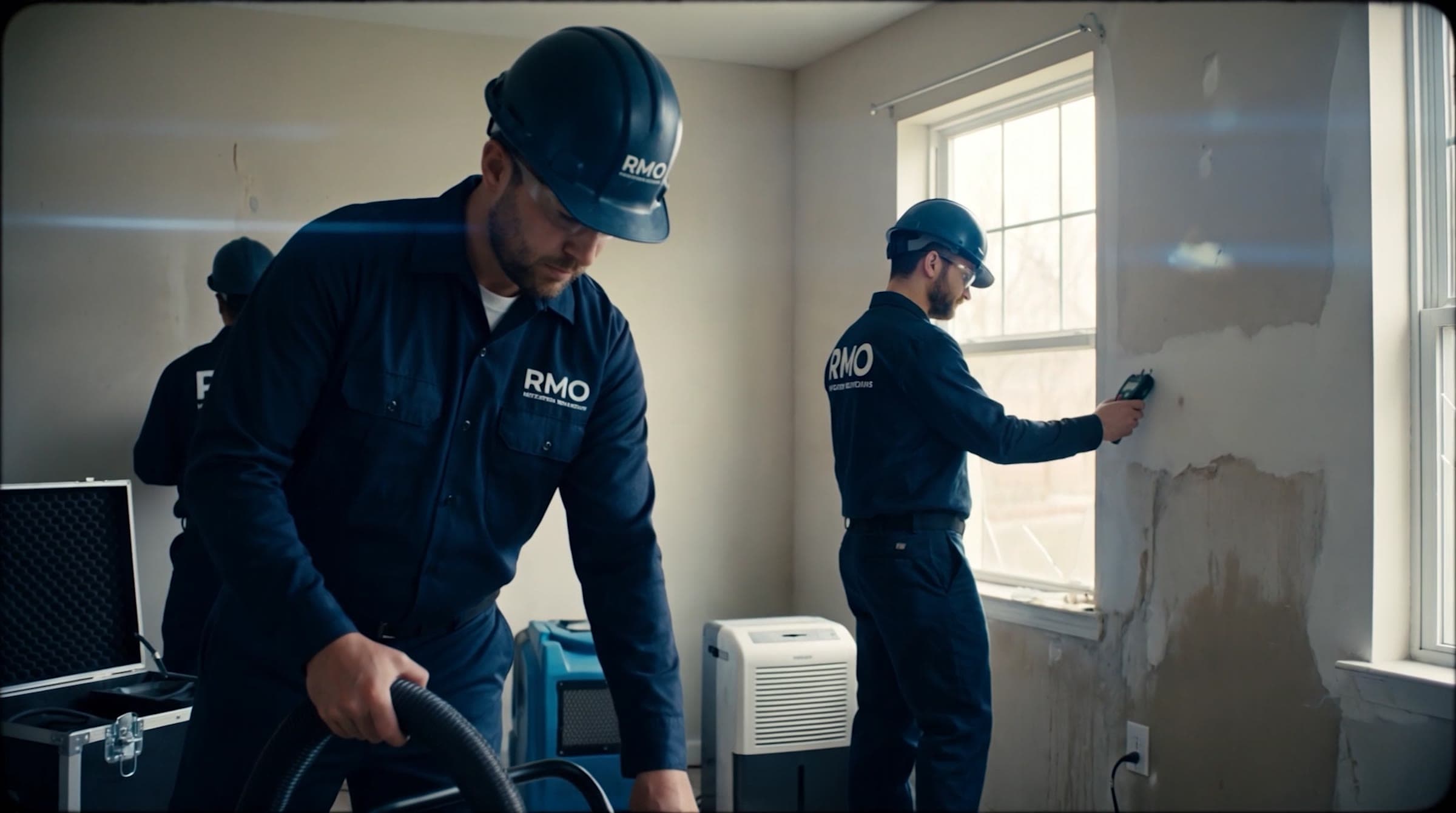
Meters and thermal imaging locate wet drywall, framing, subfloor and insulation, including spots hidden behind finishes.
A drying plan
We record the materials involved, how much of each room got wet and the equipment each space needs.
Dehumidification
Low-grain refrigerant or desiccant dehumidifiers pull water vapor from the air so wet materials keep giving up moisture.
Air movement
Air movers are angled across wet walls and floors to speed evaporation at the surface.
Cavity and floor drying
Where water is trapped inside walls or under hardwood, systems that push air into cavities or draw moisture from the floor reach what open air can't.
Small openings instead of tear-out
Removing a baseboard or drilling small holes behind it can vent a wet wall and save the drywall. We explain each opening first.
Daily moisture log
Each visit adds moisture content, temperature and relative humidity to a written log for you and your adjuster.
Final verification
Equipment comes out when every material meets its goal, and repairs can begin on a dry structure.
Signs a wall or floor is still wet
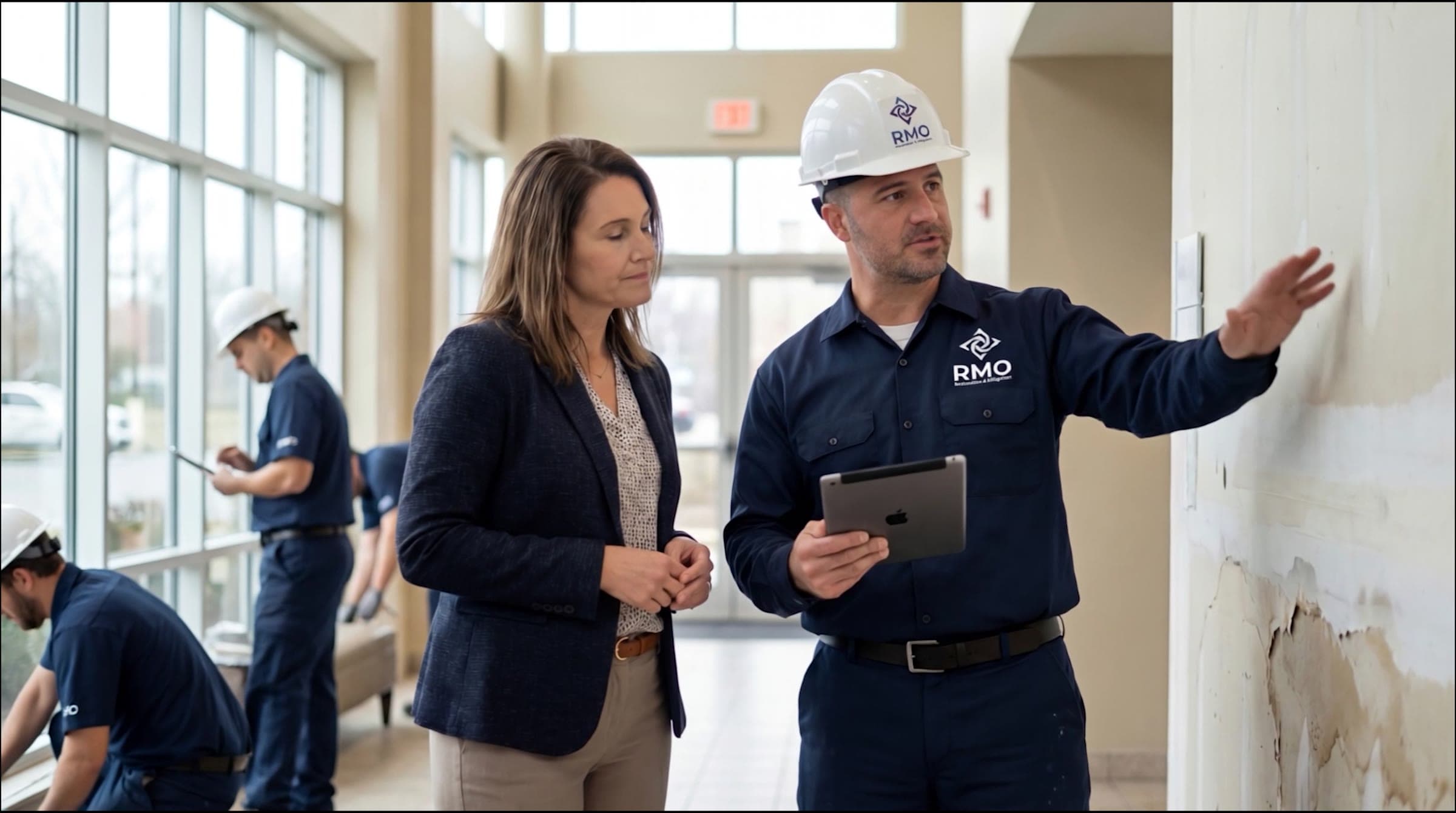
- Paint bubbling or baseboards pulling away
- Hardwood boards cupping or buckling
- A musty smell days after the leak
- Soft or stained drywall near the floor
- Swollen cabinet bases or toe kicks
From your call to the last repair
One phone number and one accountable team, from the emergency to the finished repair.
Call us, day or night
A person answers 248-845-0000 at any hour and asks a few quick questions, so the right crew and equipment roll.
On site in about 60 minutes
Across Metro Detroit, an IICRC-certified crew arrives, finds the source and makes the property safe.
Mitigate and document
We stop the damage, extract and dry, and record photos and moisture readings your insurer can use.
Restore and rebuild
Once everything is dry and clean, the same team handles the repairs, from drywall and flooring to finishes.
Why RMO for structural drying
IICRC-certified drying
Our technicians are IICRC-certified and dry to ANSI/IICRC S500, the water damage standard used across the restoration industry.
Records your adjuster can use
Daily moisture logs, photos and equipment counts support the drying part of your claim.
Nothing closed up wet
When drying ends, the same company replaces drywall, flooring and trim, and nothing is covered until the readings allow it.

We will work with your insurance
We will work with any insurance carrier you use. We’ve done it on claim after claim, and we take pride in it: every job is documented from the first hour and priced line by line, and we work hard so your insurance covers the whole project.
Many of our clients have saved thousands of dollars this way, and many paid nothing beyond their deductible.
How we help with insurance claims












Examples of carriers our customers use. RMO is an independent company and isn’t affiliated with or endorsed by these insurers.
Questions people ask us
Don’t see yours? A person answers 248-845-0000 around the clock.
How long does structural drying take?
It depends on the materials, how long they were wet and the weather. Drywall and carpet often dry within a few days, while hardwood, plaster and concrete take longer. We give you an estimate after the first readings and update it as the numbers change.
Can I turn the equipment off at night? It's loud.
Please leave it running. Drying works around the clock, and turning machines off lets the humidity climb back up, which can add days. If the noise is a problem near a bedroom, tell the technician; equipment can sometimes be repositioned.
Why not just open the windows and run fans?
Household fans move air but don't take moisture out of it, and outside air in a Michigan summer is often humid. Commercial dehumidifiers lower the humidity so water in walls and floors can evaporate, and air movers carry it to them. Without both, materials can stay wet inside long enough for mold to start.
Will you have to remove my drywall?
Not necessarily. Drywall wet with clean water can often be dried in place if work starts quickly. Drywall that's crumbling, contaminated by sewage or floodwater, or hiding soaked insulation usually comes out, and we explain each cut before we make it.
We will restore your property

Related services
All residential services- Emergency Water ExtractionPumps and extractors on site in about 60 minutes to remove standing water before it spreads into walls and floors.
- Basement Flooding CleanupPump-out, cleanup and drying for basements flooded by sump pump failure, sewer backup or heavy storms.
- Flood Damage CleanupRemoval of floodwater, mud and soaked materials, followed by disinfection and drying, for homes hit by outside flooding.

Request a call and we’ll contact you soon
Leave your name and number and a coordinator will call you back. If water is still coming in, or there’s smoke or sewage, call now.
Call 24/7248-845-0000- A person answers 24/7
- On site in about 60 minutes
- We work with your insurer
Your details
Only your name and phone number are required.