
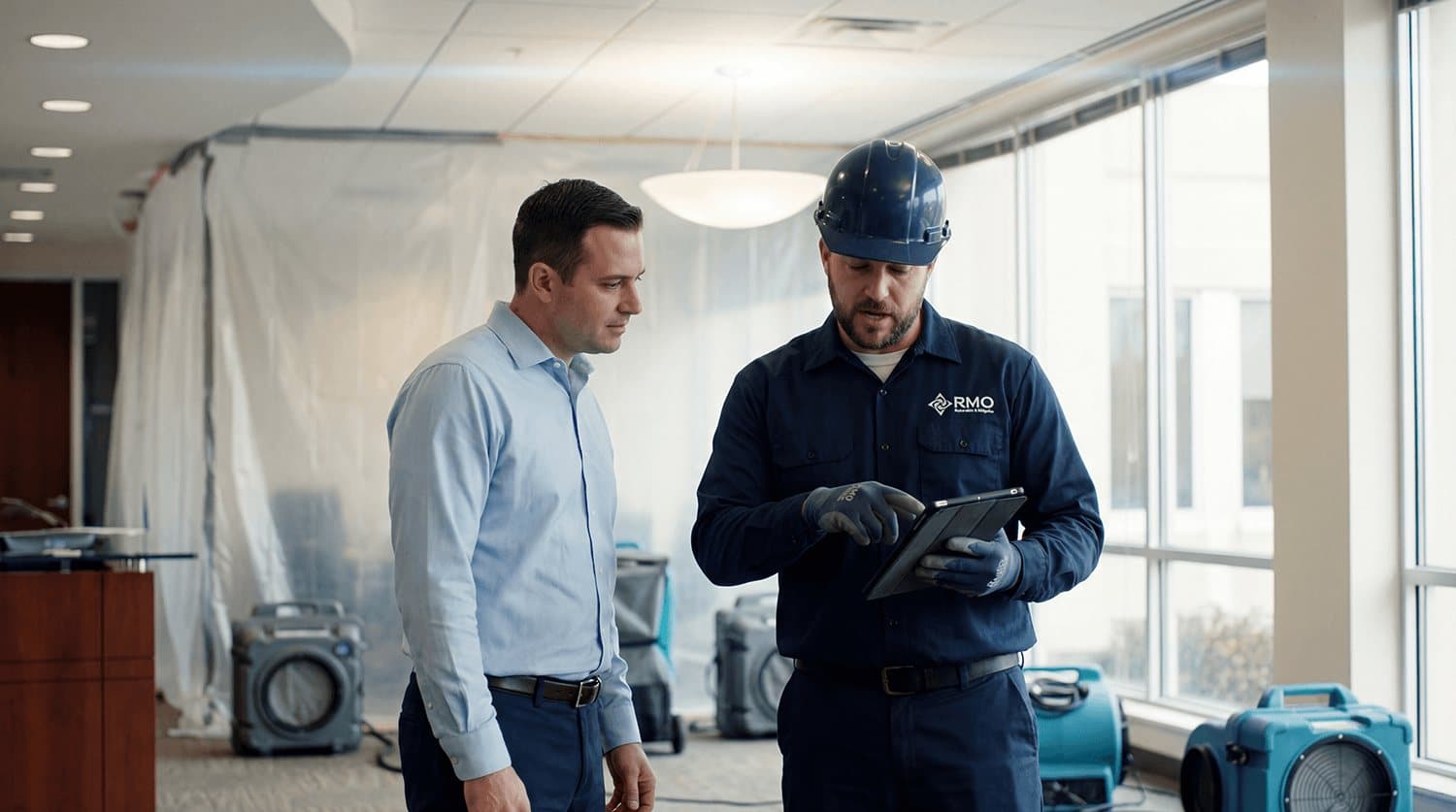
Water extraction and structural drying for Metro Detroit facilities
The faster water comes out, the less of your building has to. RMO's IICRC-certified technicians extract standing water and dry walls, floors and structure in place, following ANSI/IICRC S500 with readings logged every day.
24-hour emergency hotline248-845-0000A person answers, day or nightDrying a commercial building is measured work
Commercial buildings hold water where you can't see it: under glued-down carpet and vinyl tile, inside double-layer drywall, in the cores of block walls and in the slab itself. A few fans in a hallway won't reach it. Structural drying under ANSI/IICRC S500 means measuring the moisture, removing as much water as possible by extraction, then controlling airflow, humidity and temperature until every material reaches its goal.
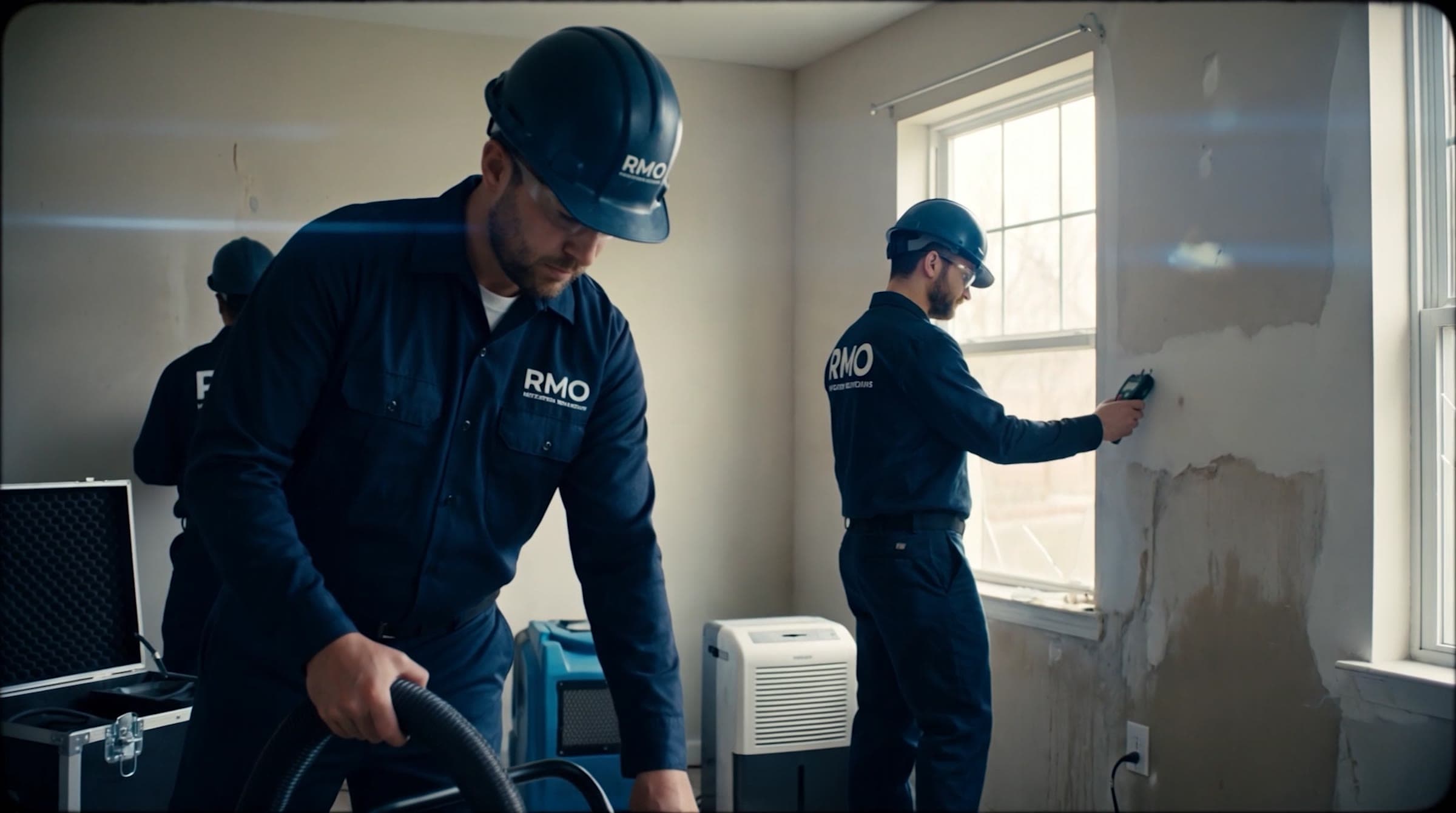
We map moisture with pin and pinless meters, using thermal imaging to find suspect areas, and set drying goals from unaffected materials of the same type in your building. Commercial extractors, weighted extraction tools and submersible pumps remove the water. Drying equipment is sized to the space: low-grain refrigerant or desiccant dehumidifiers, air movers, and injection systems for wall cavities, cabinets and hardwood.
Each day a technician logs temperature, relative humidity and moisture content, adjusts the equipment and moves it as areas dry. You and your adjuster get those logs, and they show when each room is ready for repairs, which our rebuild team can begin without bringing in a new contractor.
Extraction comes first
Every gallon removed by extraction is water the dehumidifiers don't have to pull out of the air, so drying moves faster.
Dry in place where possible
Wall-cavity and floor drying systems can save drywall, hardwood and concrete that would otherwise be torn out.
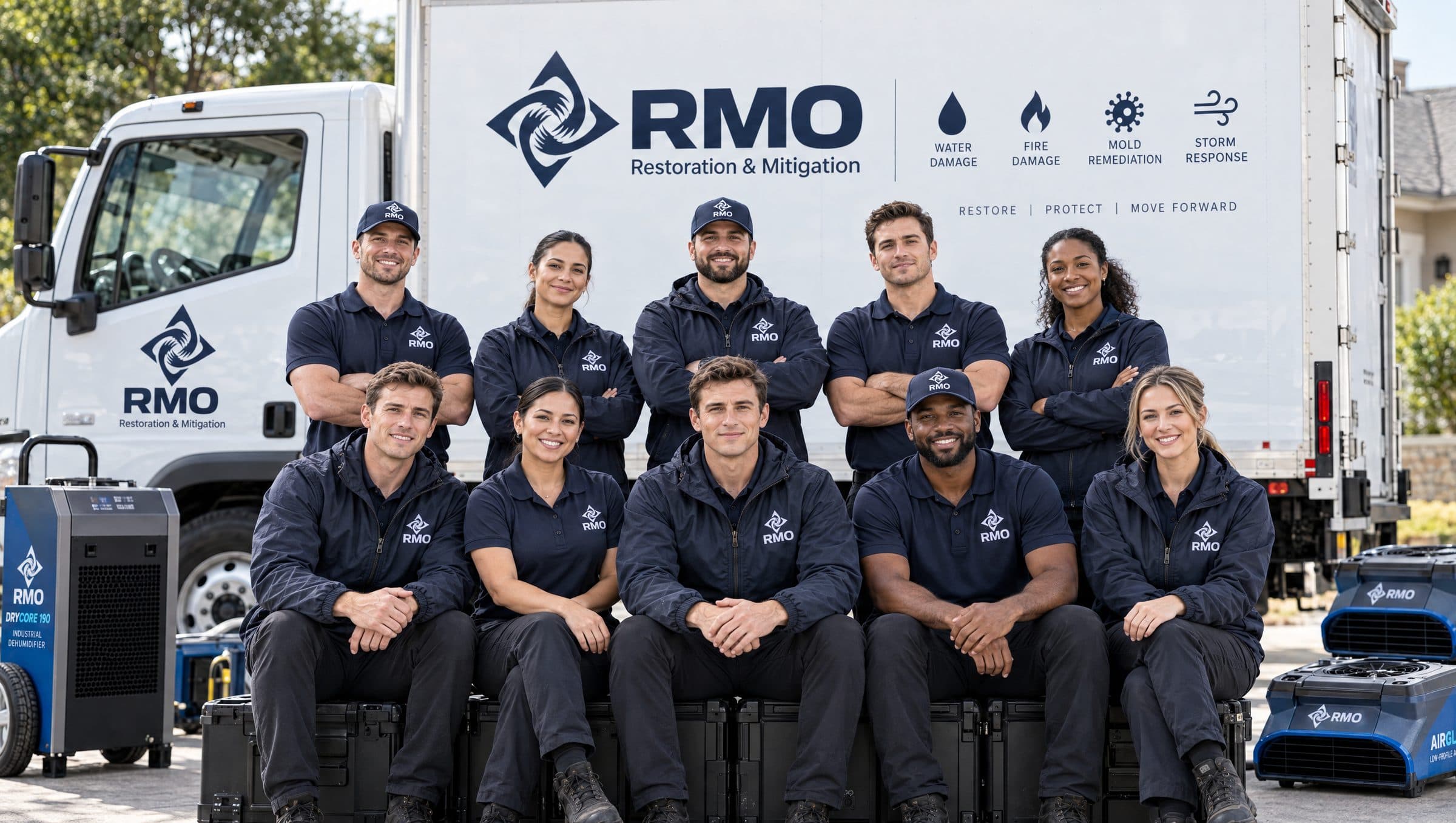
What extraction and structural drying includes
Moisture mapping
Meters and thermal imaging trace wet materials to their edges, room by room and floor by floor.
Drying goals
Targets come from dry reference materials in the same building, so a dry reading means a number, not an opinion.
High-volume extraction
Commercial extractors, weighted tools and submersible pumps remove water from carpet, pad, hard floors and lower levels.
Dehumidification
Low-grain refrigerant and desiccant dehumidifiers are matched to the building's size, temperature and materials.
Directed airflow
Air movers and cavity-drying systems push dry air across wet surfaces and into walls, cabinets and floor assemblies.
Specialty drying
Hardwood floors, concrete slabs, cabinetry and plaster get methods suited to how each one holds water.
Daily readings and logs
Readings, adjustments and equipment counts are recorded at every visit for your records and your insurer.

You need professional drying if
- Water stood on the floor for more than a few hours
- Carpet or pad is wet along the walls
- Drywall is soft or swollen near the floor
- Ceiling tiles below a leak are stained
- The air feels damp or smells musty
- Water reached a slab, hardwood floor or lower level
From your call to the last repair
One phone number and one accountable team, from the emergency to the finished repair.
Call us, day or night
A person answers 248-845-0000 at any hour and asks a few quick questions, so the right crew and equipment roll.
On site in about 60 minutes
Across Metro Detroit, an IICRC-certified crew arrives, finds the source and makes the property safe.
Mitigate and document
We stop the damage, extract and dry, and record photos and moisture readings your insurer can use.
Restore and rebuild
Once everything is dry and clean, the same team handles the repairs, from drywall and flooring to finishes.
Why RMO for commercial drying
Readings you can audit
Each reading and adjustment is logged daily, so property managers, adjusters and auditors can see how the building was dried.
Less tear-out
When readings show drying in place will work, more of your drywall, flooring and casework stays, and the rebuild gets smaller.
Ready for the next step
Once goals are met, our rebuild crew can start repairs without waiting for another contractor to bid the job.
We will work with your insurance
We will work with any insurance carrier you use. We’ve done it on claim after claim, and we take pride in it: every job is documented from the first hour and priced line by line, and we work hard so your insurance covers the whole project.
Many of our clients have saved thousands of dollars this way, and many paid nothing beyond their deductible.
How we help with insurance claims








Examples of carriers our customers use. RMO is an independent company and isn’t affiliated with or endorsed by these insurers.
Questions people ask us
Don’t see yours? A person answers 248-845-0000 around the clock.
How do you know when the building is dry?
When each material's moisture content reaches its drying goal. We set goals from unaffected materials of the same type in your building and record readings every day. You get the log, so the decision to close walls rests on numbers.
Why not open the windows and run some fans?
Fans alone move moisture from materials into the air, and without dehumidification it settles right back into the building. Humid Michigan summers make that worse. Professional drying balances airflow, dehumidification and temperature to pull water out of materials, not just off the surface.
Will the drying equipment disrupt our tenants?
It makes noise and needs power, so we plan placement with you. Cords are routed away from walkways, equipment near occupied offices is kept to what the drying requires, and moves can happen after hours. If the building's circuits can't carry the load, temporary power can be arranged.
Can wet drywall be saved?
Often, if the water was clean and drying starts quickly. Drywall exposed to gray or black water, or already showing mold growth, has to come out. We decide from the water category, the readings and the material's condition, and note the reason in the scope.
We will restore your property

Related services
All commercial services- Commercial Water Damage RestorationExtraction, drying and repairs for commercial buildings, planned around tenants and operations and documented for insurers.
- Large Loss Flood CleanupPlanned, staged response to multi-floor and multi-building water losses, with daily reporting from one project lead.
- Mold Damage RestorationContained mold removal for commercial buildings, with the moisture source addressed and independent clearance testing when appropriate.
Request a call and we’ll contact you soon
Leave your name and number and a coordinator will call you back. If water is still coming in, or there’s smoke or sewage, call now.
Call 24/7248-845-0000- A person answers 24/7
- On site in about 60 minutes
- We work with your insurer
Your details
Only your name and phone number are required.