

Compliance, permits and records on restoration jobs
Restoration work touches several sets of rules: worker safety, contaminated waste, building permits and the requirements commercial clients set for vendors. Here is how RMO handles each one, and what you can ask us for.
24-hour emergency hotline248-845-0000A person answers, day or nightRules that depend on the job
Drying a basement in a single-family home and rebuilding part of a medical office answer to different rules. Worker safety, waste handling, permits and vendor requirements all change with the building and the work, so we sort out which ones apply before the job starts.
We would rather show our paperwork than make broad claims about it. If you need documents for your files, ask the office and we will send what applies to your job. If your project calls for a specific license or registration, ask before work starts and we will give you a straight answer.
Compliance through the life of a job
- 01
Before work starts
The crew lead checks the site for hazards, and we confirm the owner's or manager's vendor requirements and whether any planned repairs will need a permit.
- 02
Setting up the site
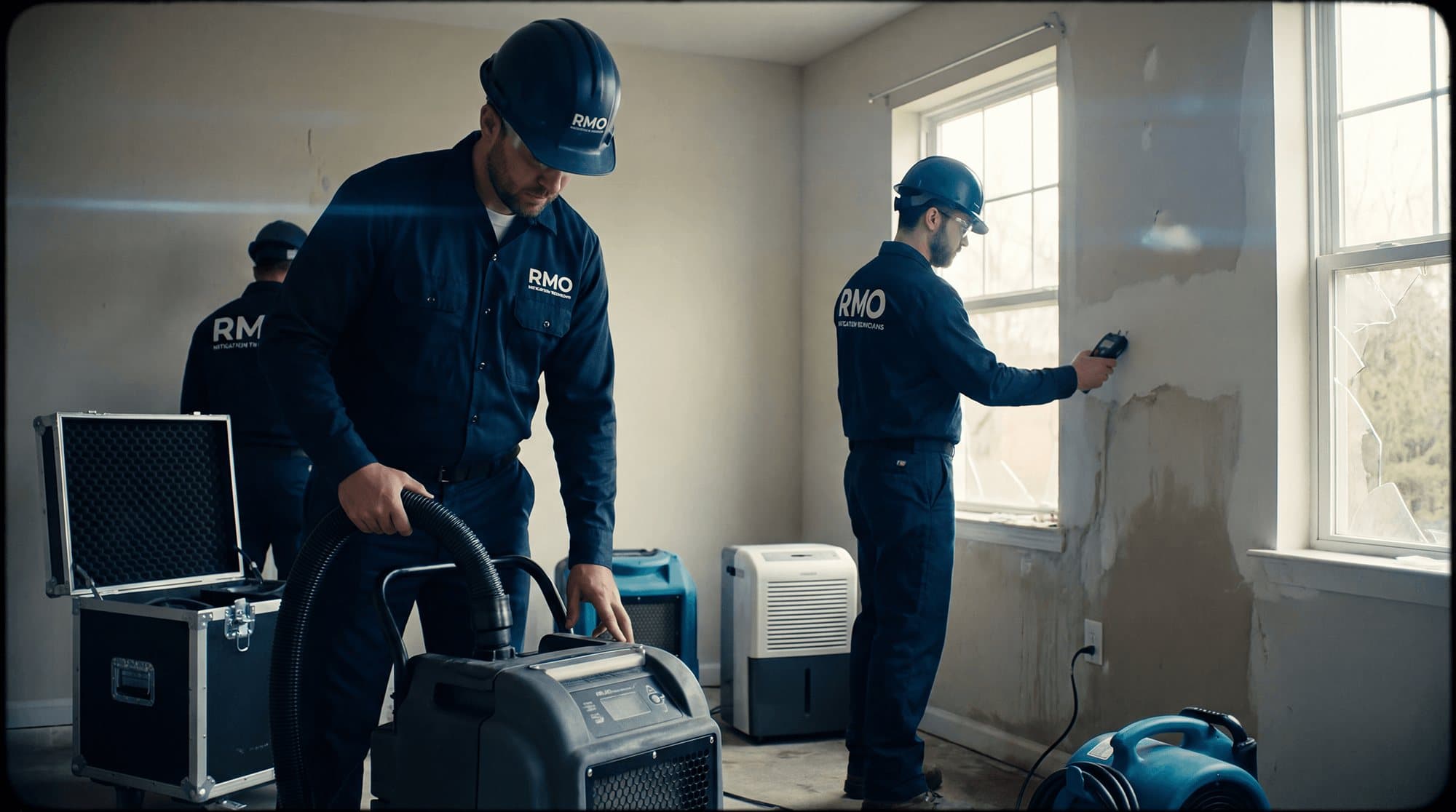
Crews work to OSHA requirements for the hazards they face, including protective equipment, electrical safety, hazard communication, ladders and lifting. Containment goes up before dusty or contaminated work begins.
- 03
Products and contaminated materials
Cleaning and antimicrobial products are used according to their labels, with a safety data sheet kept for each. Materials soaked by sewage or other Category 3 water, or with mold growth, are bagged and sealed inside the work area, carried out through containment and disposed of according to local rules.
- 04
Permits for repairs
When repairs require a permit, as many electrical, plumbing and structural repairs do, the permit is pulled before that work starts and inspections are scheduled with the local building department.
- 05
Records after the job
Each job has a file: photos, moisture readings, drying logs, the itemized scope and any changes you approved. The file stays on record after the job closes, so later questions can be answered.
What commercial clients can ask us for
Property managers and facility teams often need paperwork before a vendor starts work. Ask us for:
- A certificate of insurance for your vendor file
- The scope of work and schedule before work begins
- Safety data sheets for the products we plan to use
- A containment and access plan for occupied areas
- Daily moisture readings and drying logs
- Photos of the work area before, during and after
- Contact details for the crew lead and the office
Compliance questions
Do repairs after water damage need a permit?
It depends on the work and the city. Electrical, plumbing and structural repairs usually need one, while cosmetic work often does not. We confirm with the local building department before that part of the job starts.
Can you follow our building's vendor and site rules?
In most cases, yes. Send them before work starts: sign-in procedures, badges, work hours, restricted areas and escort requirements are part of planning a commercial job. If something needs to be worked out, we will tell you plainly.
Why does sewage-damaged material have to be thrown out?
Porous materials such as carpet, pad and drywall soak up sewage and cannot be reliably cleaned, and the ANSI/IICRC S500 standard generally calls for removing them. Hard surfaces can usually be cleaned and treated instead.
We will restore your property

Request a call and we’ll contact you soon
Leave your name and number and a coordinator will call you back. If water is still coming in, or there’s smoke or sewage, call now.
Call 24/7248-845-0000- A person answers 24/7
- On site in about 60 minutes
- We work with your insurer
Your details
Only your name and phone number are required.