
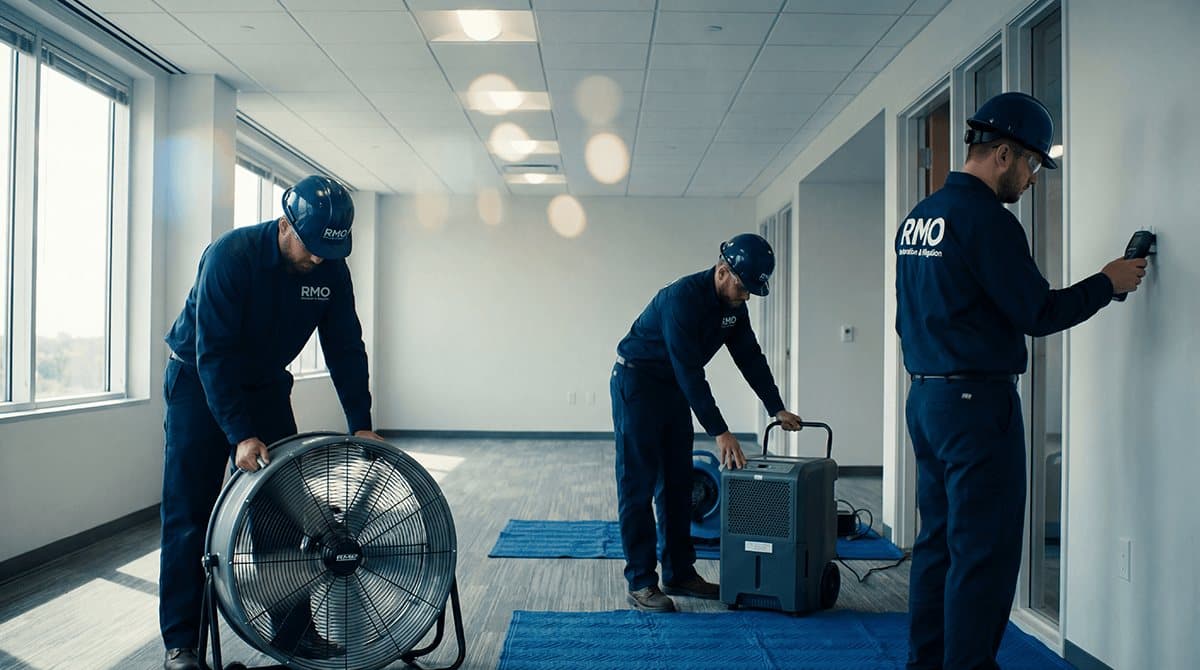
IICRC-certified technicians and the standards behind the work
RMO's team is IICRC-certified, and our water, mold, and fire and smoke work follows the ANSI/IICRC standard written for each. Here is what that means for your property and your paperwork.
24-hour emergency hotline248-845-0000A person answers, day or nightWhat IICRC certification means
The IICRC, short for the Institute of Inspection, Cleaning and Restoration Certification, is a nonprofit that writes standards for the cleaning and restoration industry. It certifies individual technicians: each one completes an IICRC-approved course and passes an exam for that discipline.
Certification has to be kept current through renewal and continuing education, so it reflects ongoing learning rather than a single class. It is an industry credential, not a government license. For you, it means the people working in your building were trained in how water, mold and smoke behave, and in how to measure the results.
Our IICRC certifications
Our team holds IICRC certifications in every restoration discipline we work in, so the crew on your job is trained for the kind of damage you have.
Water Damage Restoration (WRT)
Extraction, drying and cleanup for clean, gray and sewage water, and knowing which materials can be dried and which must come out.
Applied Structural Drying (ASD)
Drying walls, floors, cavities and framing to measured goals with the right mix of air movers, dehumidifiers and specialty drying systems.
Applied Microbial Remediation (AMRT)
Mold containment, negative air, removal of contaminated materials and cleaning to bring the area back to normal conditions.
Fire and Smoke Restoration (FSRT)
Identifying soot and smoke residues and cleaning structures and belongings with the method each surface needs.
Odor Control (OCT)
Finding the source of an odor and treating it with methods such as thermal fogging, hydroxyl generators or ozone, instead of covering it up.
The standards that guide our work
The ANSI/IICRC standards describe how professional restoration should be done. These three shape most of our jobs.
S500 for water damage
Sorts water into three categories, from clean supply-line water (Category 1) to grossly contaminated water such as sewage (Category 3). It sets out how to extract water, dry structures and confirm the drying with measurements.
S520 for mold
Calls for containing the affected area, removing mold growth at its source instead of covering it, and correcting the moisture that caused it. Visible mold should not be disturbed before containment is in place.
S700 for fire and smoke
Covers assessing fire and smoke residues, choosing cleaning methods that suit each surface and residue type, and controlling smoke odor in structures and contents.
Records that show the work
The standards put weight on documentation: readings, photos and notes that show what was found and what was done. We keep those records on every job, and they are what an adjuster reviews.
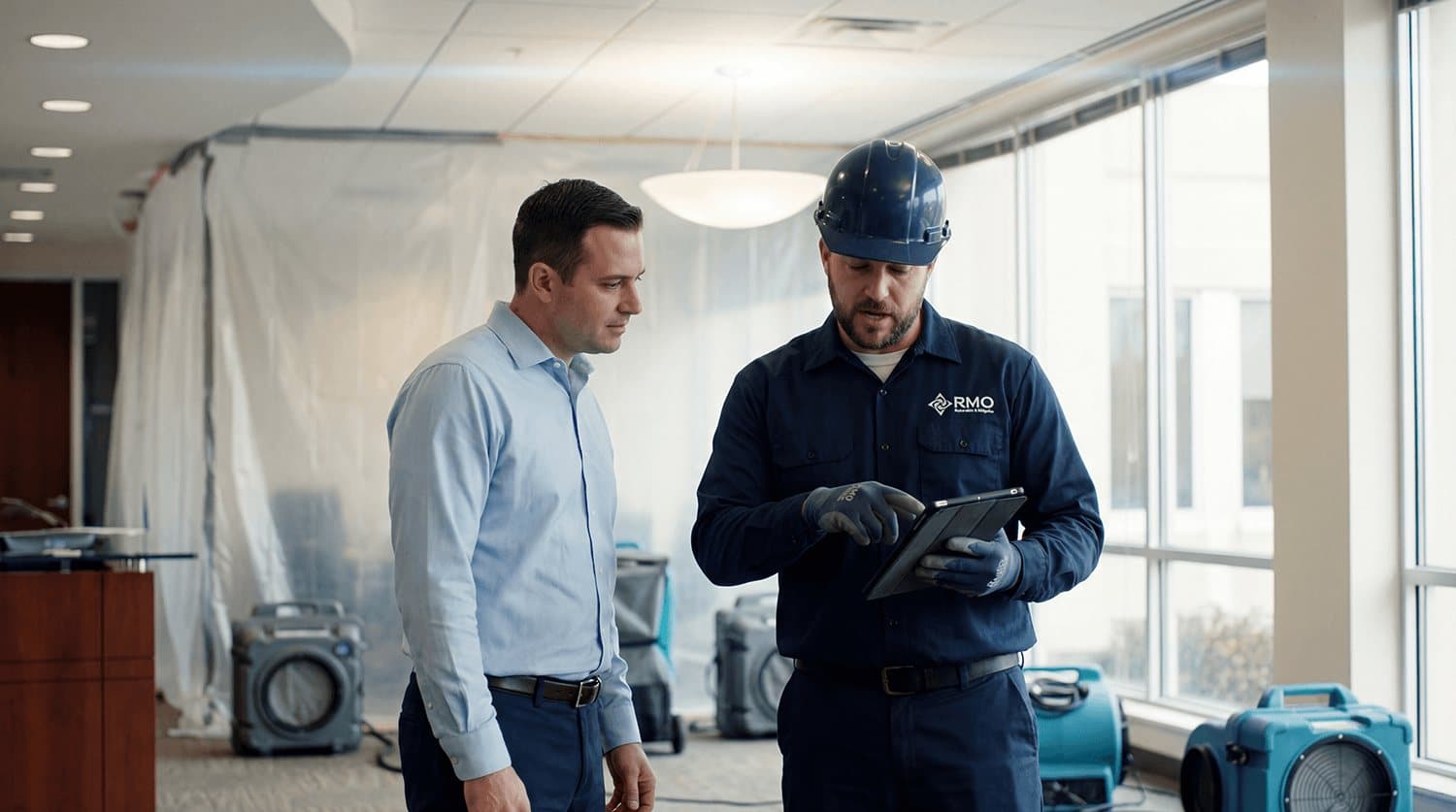
Training that continues after the exam
Certification is a starting point. Training continues on the job, with new equipment and with each new kind of loss. It covers:
- Moisture meters, thermo-hygrometers and thermal imaging cameras, and reading their numbers correctly
- Placing air movers, commercial dehumidifiers and HEPA air scrubbers for the space and the materials
- Building containment and negative air for mold, sewage and demolition work
- Choosing and wearing protective equipment, including respirators, for each hazard
- Electrical safety around water, ladder use and safe lifting
- Reading product labels and safety data sheets before any chemical is used
- Recording photos, readings and drying logs the same way on every job
- Explaining the work to customers in plain terms
Questions about certification
Is IICRC certification the same as a license?
No. IICRC certification is an industry credential that individual technicians earn through courses and exams, while a license is issued by a government agency. Michigan, for example, does not issue a license for mold remediation.
Does IICRC certification matter for an insurance claim?
It can help. Many adjusters know the IICRC standards, and work documented to those standards is easier to review. Your insurer still makes its own coverage decisions.
How can I check a technician's certification?
Ask us, and we will tell you which technicians on your job hold IICRC certification and in which disciplines. The IICRC website also lets you look up IICRC-certified technicians.
We will restore your property

Request a call and we’ll contact you soon
Leave your name and number and a coordinator will call you back. If water is still coming in, or there’s smoke or sewage, call now.
Call 24/7248-845-0000- A person answers 24/7
- On site in about 60 minutes
- We work with your insurer
Your details
Only your name and phone number are required.