
In short: Mold needs moisture, so the way to stop it after a leak or flood is to dry things quickly. EPA advises cleaning and drying damp or wet building materials and furnishings within 24 to 48 hours, and says that in most cases mold won't grow if you do. If that window has passed, the Red Cross says to assume mold is growing. Small patches can often be cleaned by a homeowner. Large areas, hidden growth and anything touched by sewage call for a professional.
Why 24 to 48 hours matters
Some mold spores are in every home's air and dust. EPA says they float through indoor and outdoor air and that it's impossible to get rid of all of them indoors. They're usually not a problem until they land on a damp spot and start growing. After a leak, the damp spots include the paper face of drywall, wood framing, carpet pad, ceiling tiles and insulation, and those materials can hold water where you can't see or feel it.
The window is a guideline, not a stopwatch. EPA's water damage table notes that mold may grow even when materials dry within 48 hours, and that mold won't necessarily grow after 48 hours. The practical lesson is to start drying the same day.
What fast drying looks like
- Fix the water source first. EPA warns that if you clean up mold without fixing the water problem, the mold will most likely come back.
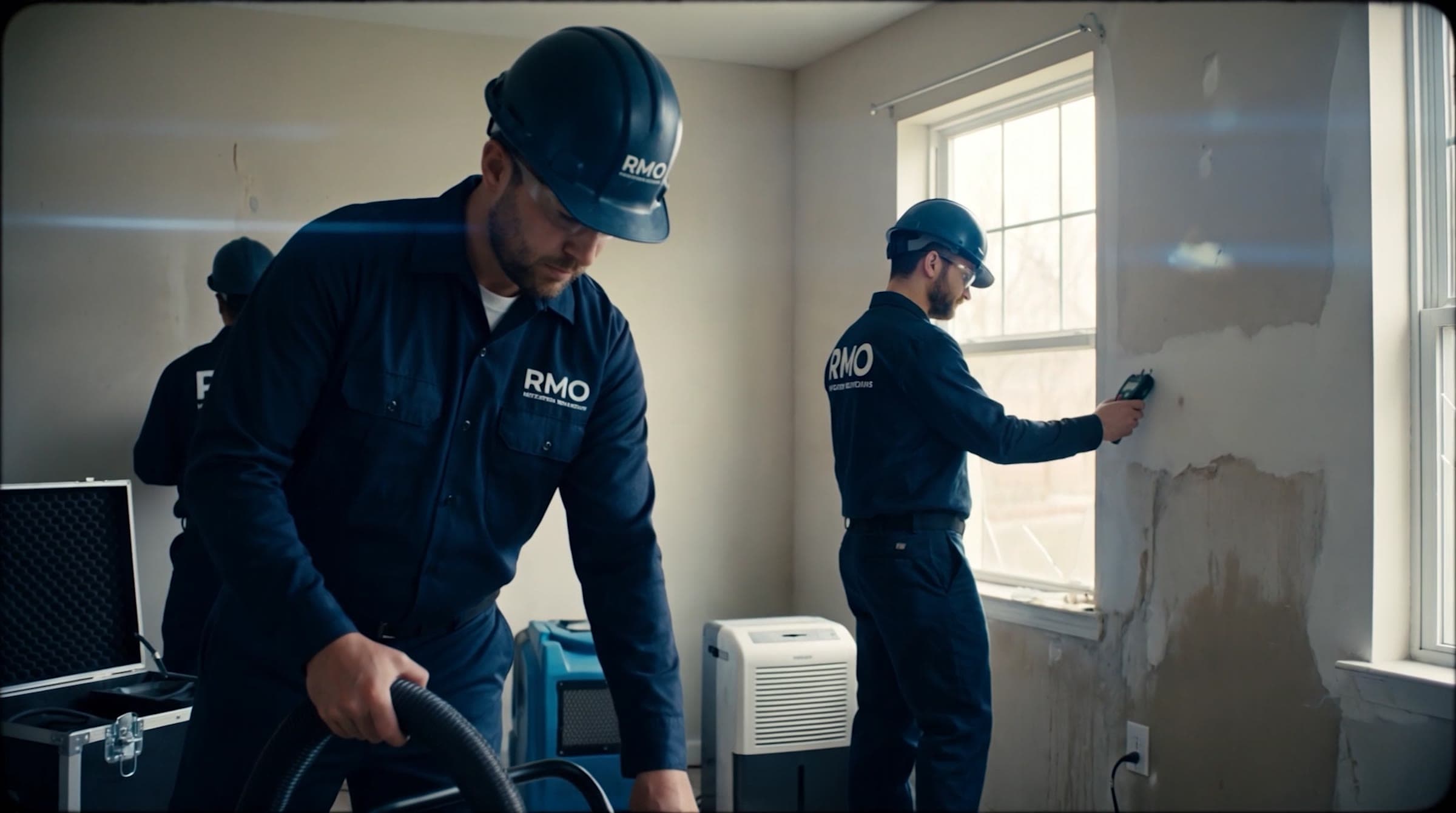
- Remove standing water from carpet with a water extraction vacuum, then lower the humidity with dehumidifiers and speed drying with fans. That's the sequence EPA's water damage table gives for wet carpet.
- Discard wet ceiling tiles and wet cellulose or fiberglass insulation, as the same table advises.
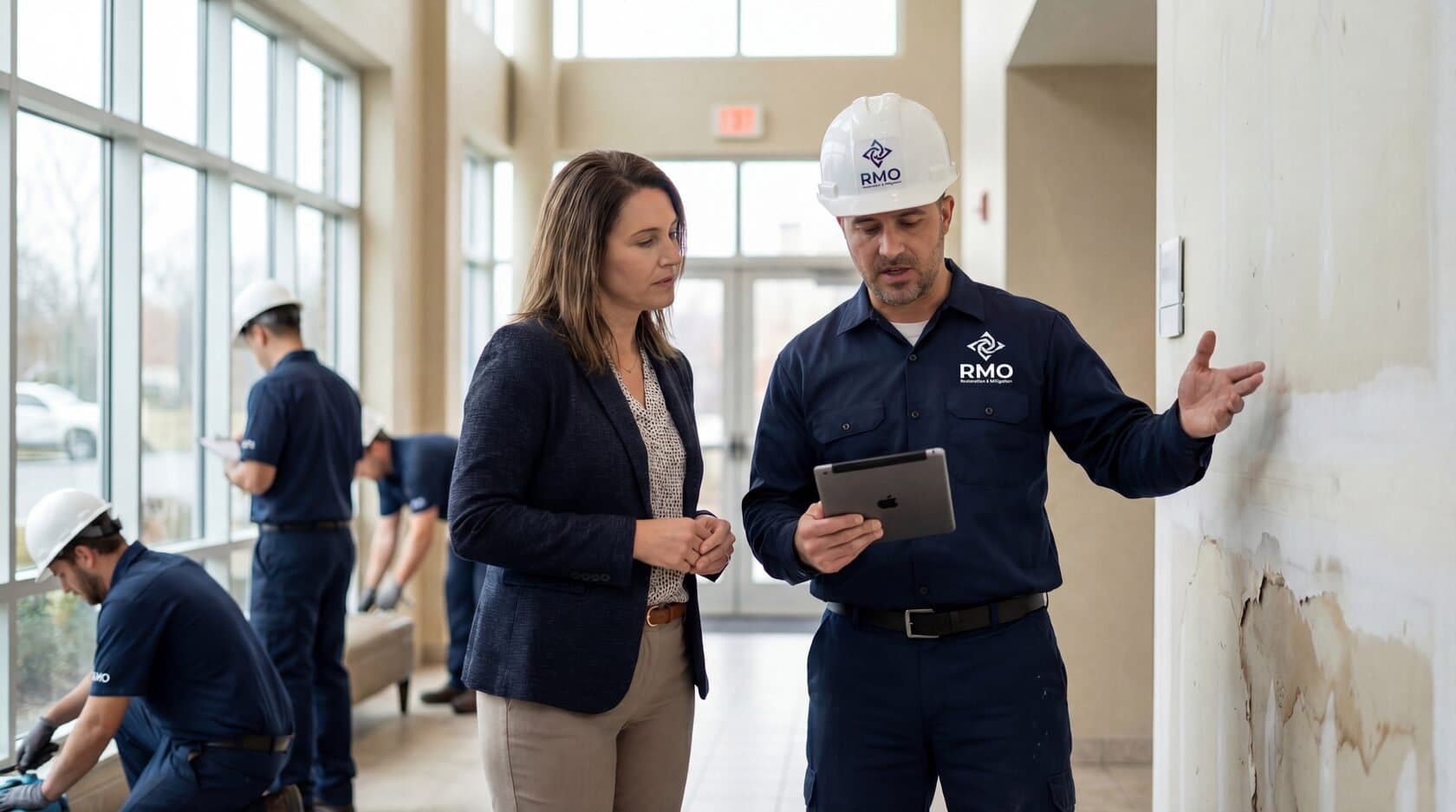
- Check drywall. EPA says it may be dried in place if there's no obvious swelling and the seams are intact. If not, it comes out.
- Bring indoor humidity down. EPA recommends keeping it below 60 percent, ideally between 30 and 50 percent.
- Measure instead of guessing. Moisture meters and thermal imaging find water inside walls and under floors, and daily readings show when drying is actually done.
What not to do
- Don't paint or caulk over mold. EPA says paint applied over moldy surfaces is likely to peel; clean and dry the surface first.
- Don't rely on bleach. EPA does not recommend chlorine bleach or other biocides as a routine part of mold cleanup, and warns never to mix bleach with cleaners that contain ammonia because toxic fumes can form.
- Don't run the furnace or air conditioning if you know or suspect the system is contaminated with mold. EPA says that can spread mold through the building.
- Don't tear into hidden mold. EPA notes that pulling off wallpaper with mold growing behind it can release a massive amount of spores.
- Don't touch mold with bare hands. For small cleanups, EPA suggests an N-95 respirator, long gloves and goggles without ventilation holes.
Do you need a mold test?
Usually not. EPA says that in most cases, if mold is visible, sampling is unnecessary, and no federal limits exist to compare results against. The Michigan Department of Health and Human Services (MDHHS) does not recommend mold testing and doesn't test homes itself. Sampling can be useful in specific cases, such as confirming that a cleanup worked, and EPA says it should be done by professionals experienced in sampling.
When to call a professional
- The moldy area is larger than about 10 square feet, roughly 3 feet by 3 feet. EPA says most people can handle smaller patches themselves.
- There was a lot of water damage, or the water came from a sewer backup or another contaminated source.
- You smell mold but can't see it. EPA lists the back of drywall and paneling, the top of ceiling tiles, the underside of carpet and pad, and the inside of ductwork as places it hides.
- The heating and cooling system may be involved.
- Someone in the home has asthma, another lung condition or a weakened immune system. Ready.gov says people with those conditions should not enter buildings with indoor leaks or mold that can be seen or smelled, and EPA advises talking to a health professional before cleanup if you have health concerns.
Choosing a mold contractor in Michigan
According to MDHHS, the State of Michigan does not certify mold remediators or mold testing companies, so there is no state license to ask for. Ask about experience and references instead, and which standard the work will follow. EPA suggests asking contractors to follow its Mold Remediation in Schools and Commercial Buildings guide or guidelines from other professional or government organizations. The industry standard for professional mold remediation is ANSI/IICRC S520.
RMO's IICRC-certified technicians handle mold remediation to the ANSI/IICRC S520 standard, with containment and HEPA air filtration, across Oakland, Wayne and Macomb counties.
Sources
- EPA: A brief guide to mold, moisture and your home
- EPA: Mold cleanup in your home
- EPA: Ten things you should know about mold
- EPA: Mold testing or sampling
- EPA: Water damage cleanup and mold prevention, Table 1 (PDF)
- Michigan Department of Health and Human Services: All about mold
- American Red Cross: Flood safety
- Ready.gov: Floods