

In short: When water hits an apartment building, work in this order: stop the water at the nearest shut-off, protect people and electrical systems, check every unit below and beside the leak, tell the affected tenants what is happening, document everything, and get extraction and drying started within hours. Water moves down and sideways through ceilings, walls and floors, so the unit you can see is rarely the only one that's wet.
Before it happens

The first hour
Stop the water
At the closest valve that will do it: the fixture, the unit, the riser, or the building main.
Protect people and power
If water is near electrical panels, fixtures or elevator equipment, cut power to the affected area if it's safe, or call an electrician. Keep people out of rooms where water is coming through light fixtures.
Mind the sprinklers
If a fire sprinkler discharged, closing its control valve stops the water but leaves part of the building without fire protection. NFPA 25 calls that an impairment; its guidance includes notifying the fire department, the insurance carrier, the alarm company and the owner, and measures such as a fire watch if protection will be out for more than 10 hours in a 24-hour period.
Knock on doors
Every unit below and next to the leak, including the ones that look fine from the hallway.
Make two calls
The restoration company, then your insurance agent.
Communicate early
Ready.gov's crisis communications guidance says the need to communicate is immediate when an emergency occurs, and that messages should be consistent. In an apartment building, tenants are the first audience. Tell the affected ones what happened, whether they can stay, when crews will need access, how long equipment will run and who to call with questions. A short written notice under every affected door, followed by updates, prevents most complaints.
Document like the adjuster is watching
For the claim
- Photos and video of the source, every affected unit and common area, and the water lines on walls and ceilings, before cleanup starts
- The time the leak was found, who found it, and when each valve was closed
- The failed part kept: the burst supply line, the cracked fitting, the failed valve
- Receipts, estimates, invoices and records, which DIFS says help support a claim; ask about business interruption coverage too
Drying a multi-unit building
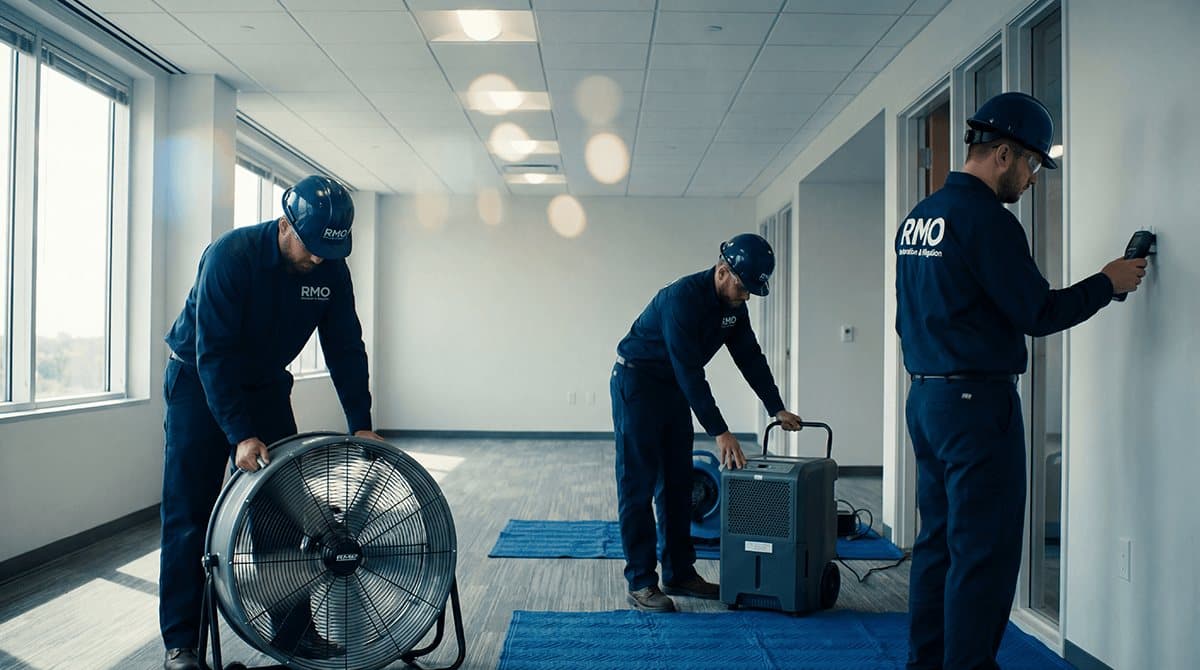
Shared walls, ceilings and floor cavities mean moisture has to be traced unit by unit with meters and thermal imaging, not by looking. EPA's guidance for larger buildings stresses drying wet materials within 24 to 48 hours and controlling moisture to prevent mold, and its remediation guide for commercial buildings applies to apartments too. Expect the crew to need access to several units, sometimes for a few days, while equipment runs and readings are taken.
Who pays for tenants' belongings?
Usually the tenant's own renters insurance, if they have it. The building's policy covers the building. Check your lease and your policy.
Can I shut off the fire sprinklers?
Closing the valve stops the water but impairs fire protection. Follow NFPA 25's impairment steps: notify the fire department, the carrier, the alarm company and the owner.
How long will the crew need access to units?
Often a few days, while equipment runs and readings are taken, unit by unit, until everything measures dry.
Sources
- Ready.gov: Emergency response plan
- Ready.gov: Crisis communications plans
- NFPA: NFPA 25 guidance on fire safety during sprinkler system restoration
- EPA: Mold remediation in schools and commercial buildings, Chapter 1
- EPA: Mold remediation in schools and commercial buildings, Chapter 4
- Michigan DIFS: Disaster preparedness and recovery