
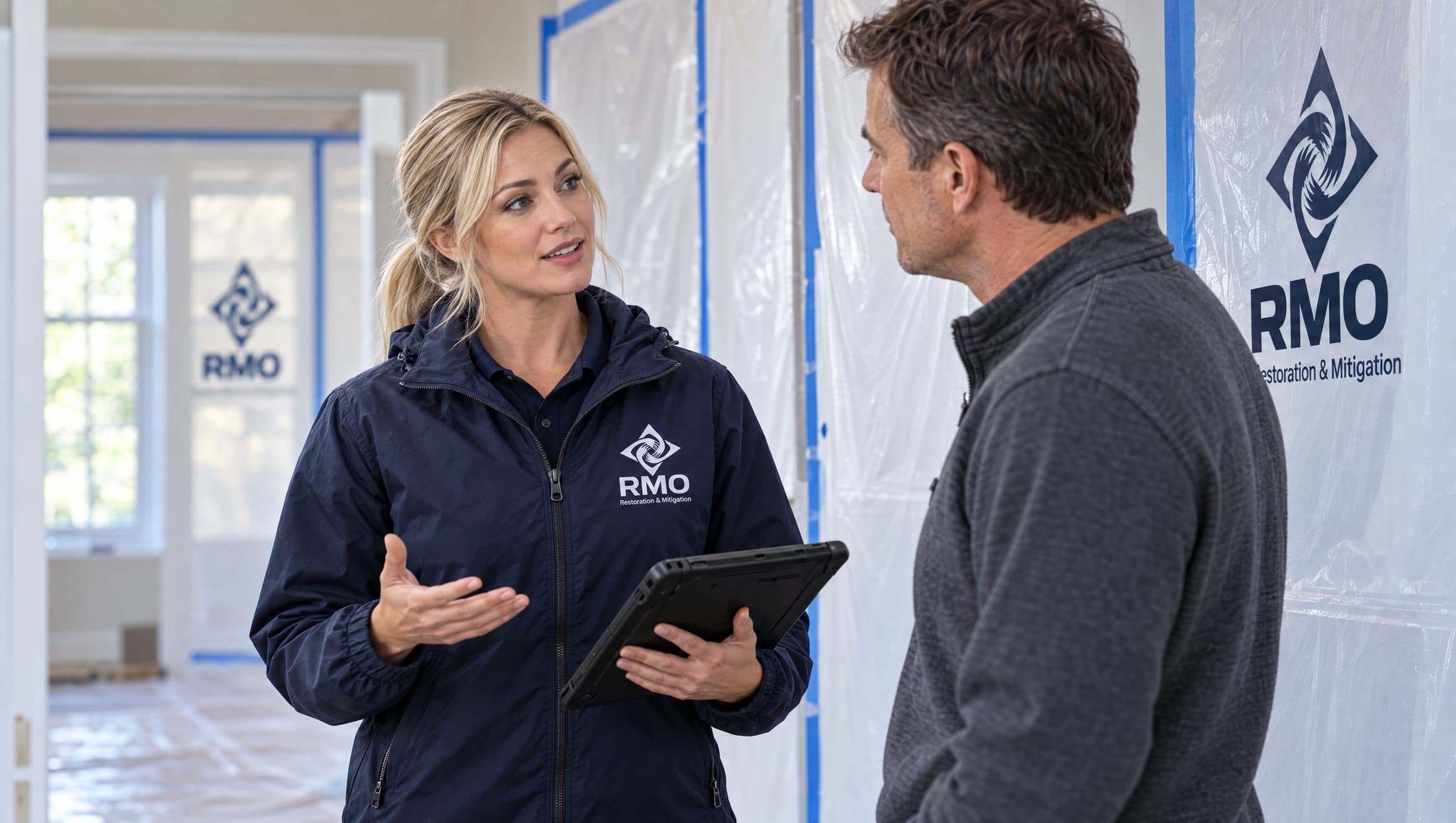
Mold remediation and removal for Metro Detroit homes
Mold remediation for Metro Detroit homes starts with the water behind it. RMO Mitigation & Restoration finds the moisture source, contains the area and removes the mold and the materials it damaged, following the ANSI/IICRC S520 standard. Our IICRC-certified team covers Oakland, Wayne and Macomb counties; call (248) 845-0000, answered 24/7.
24-hour emergency hotline248-845-0000A person answers, day or nightWhat does mold remediation involve?
Mold remediation means removing mold growth and the materials it damaged under containment, then drying the structure and documenting the moisture that fed it. Surface cleaning is not the same thing: wiping or spraying visible spots leaves growth inside porous materials and the water source in place, so the mold comes back.
RMO follows the ANSI/IICRC S520 standard, which calls for containing the affected area, removing growth at its source and correcting the moisture that caused it. Visible mold isn't disturbed until containment is in place, because scraping or spraying it sends spores through the house.
Mold follows water. In a home it often grows in a basement that took on water and never fully dried, or on the wall behind a slow plumbing leak. Attic mold usually starts where moist air from the house condenses on the cold roof deck in winter.
The moisture source goes on record so it can be fixed: by us when it's within our work, or by the plumber or roofer it calls for. For an office, school or apartment building, see commercial mold remediation. If you see or smell mold at home, call (248) 845-0000.
Containment before removal
Plastic sheeting and negative air pressure keep spores inside the work area, away from the rest of your home.
Independent clearance
When you want a clearance test, an independent assessor, not RMO, samples the area before containment comes down.
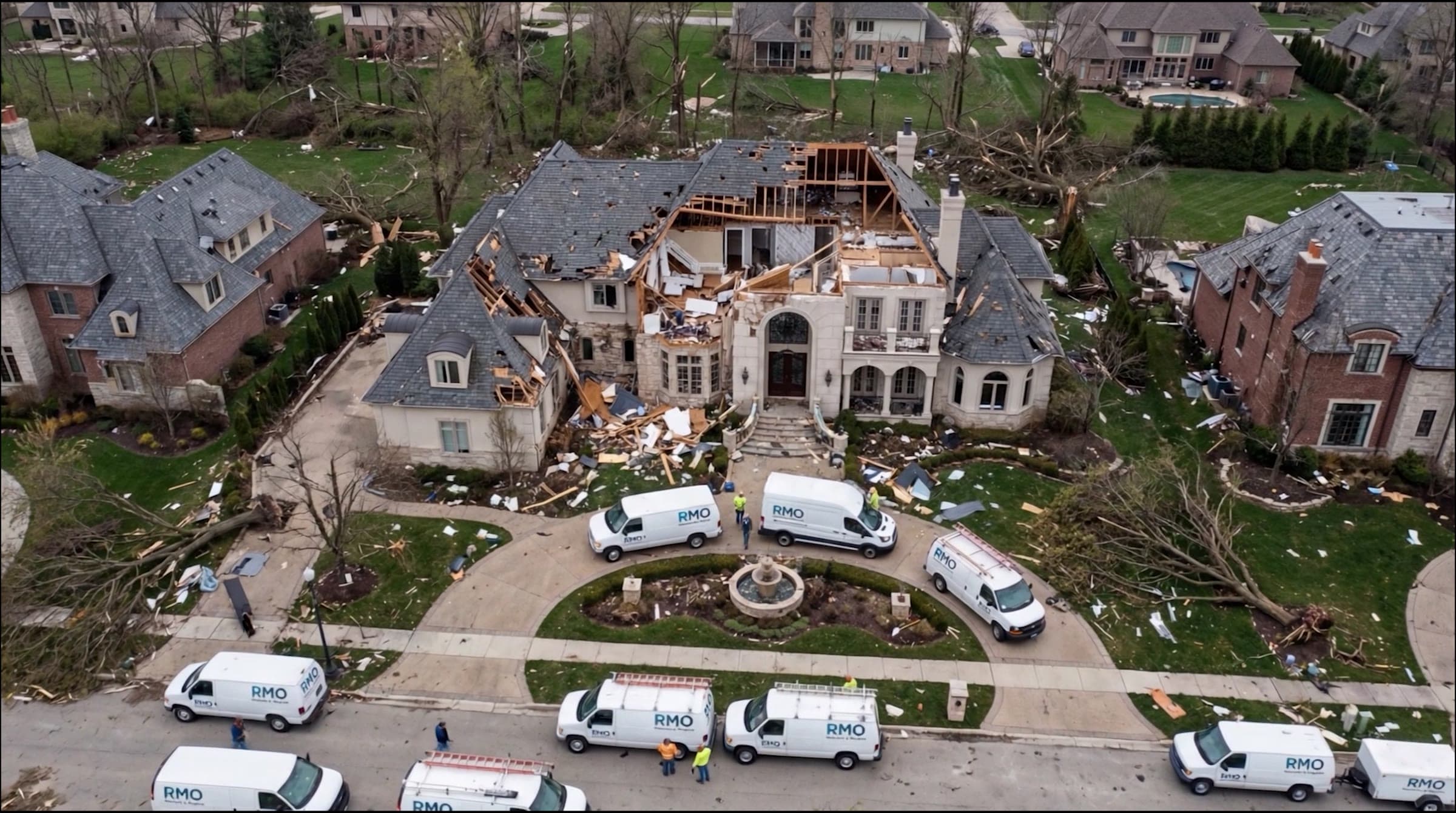
How does RMO remove mold from a home?
Moisture investigation
Meters, thermal imaging and a look at nearby plumbing, roofing and ventilation trace the water that feeds the growth.
Mold inspection and scope
We map how far the growth extends, including behind drywall and under flooring, and explain the scope before work starts.
Containment
Plastic sheeting seals the work area, and doorways, vents and returns are closed off so spores don't travel through the house.
Negative air and HEPA filtration
HEPA air scrubbers exhaust filtered air from the containment, keeping the work area under negative pressure.
Removal of mold-damaged materials
Drywall, insulation, carpet and pad the mold has damaged are cut out, bagged inside containment and taken out. Black mold is removed the same way as any other growth.
Cleaning what stays
Framing and hard surfaces are HEPA vacuumed and cleaned to remove growth and settled spores.
Drying
The area is dried to measured goals, and the moisture source is documented so it can be repaired before anything is rebuilt.
Rebuild
After drying, RMO's own crews replace the drywall, insulation and flooring that came out.
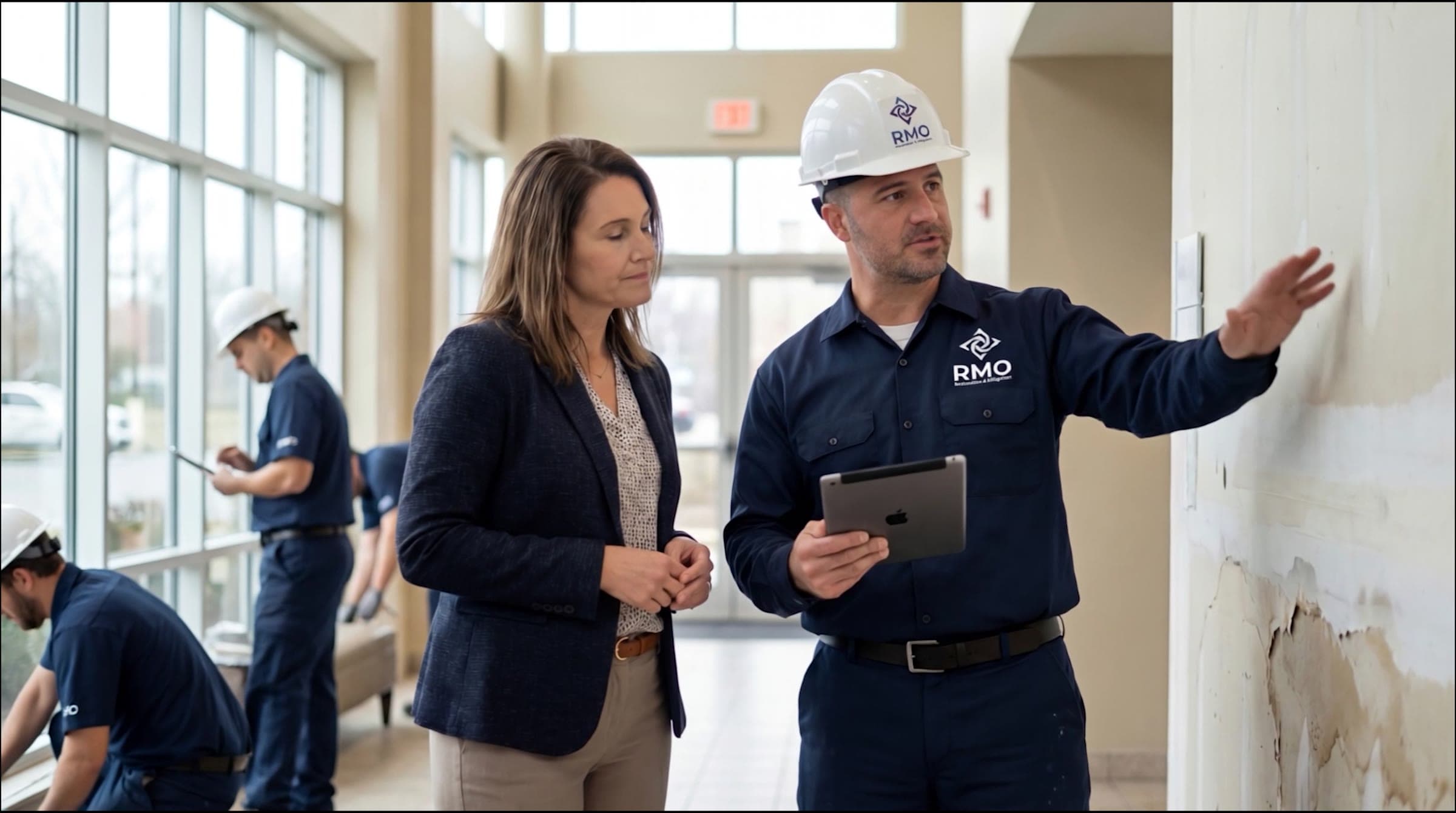
Signs you need mold remediation
- A musty smell that keeps coming back
- Spots or fuzzy growth on drywall or ceilings
- A leak or flood that was never professionally dried
- Peeling paint or warped drywall near a past leak
- Condensation on windows or cold pipes
- Growth in the attic or on basement walls
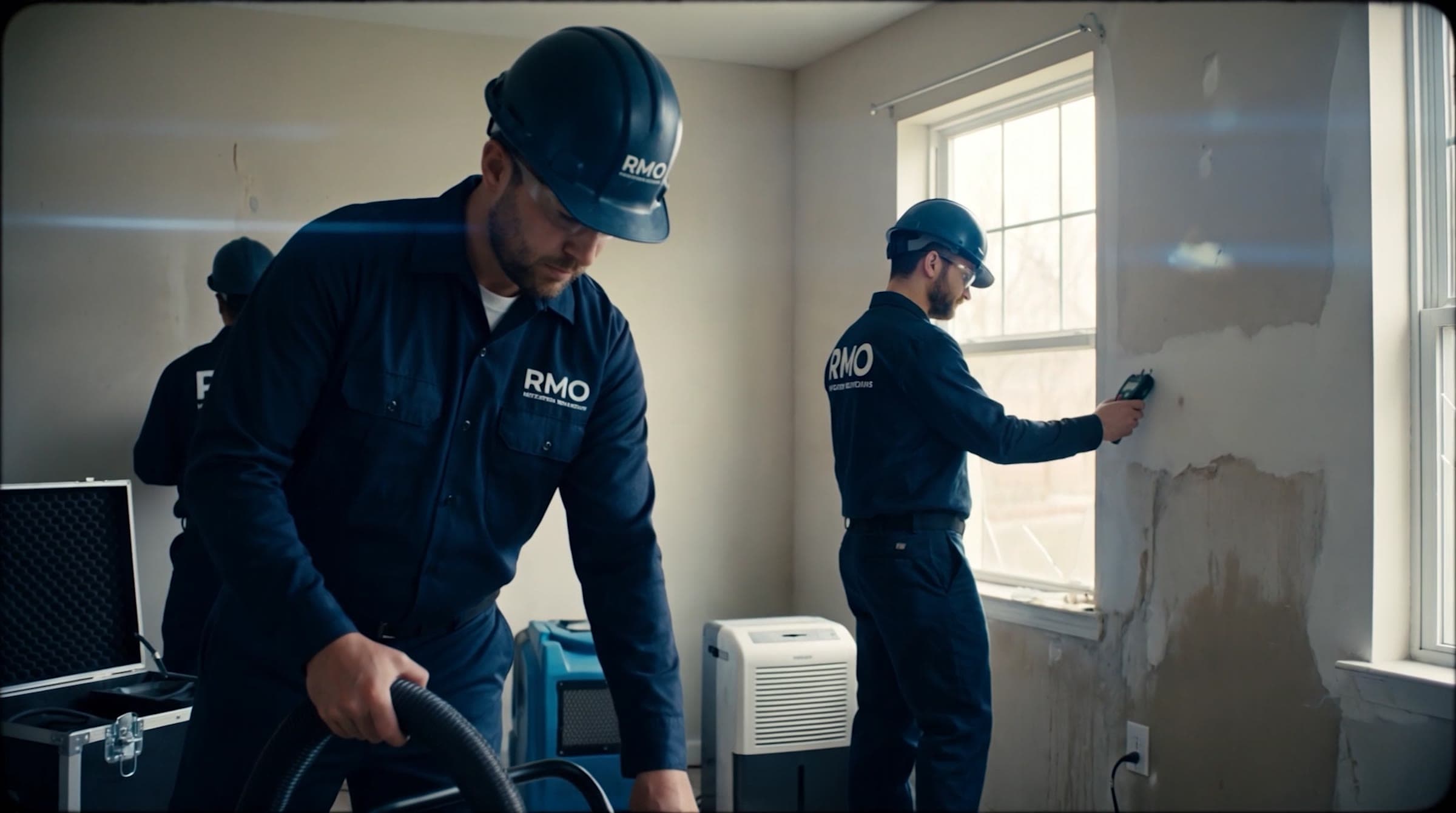
The four steps of an RMO job
Call one number. We stay with the job until the last repair is done.
Call us, day or night
A person answers (248) 845-0000 at any hour and asks a few quick questions, so the right crew and equipment roll.
On site in about 60 minutes
Across Oakland, Wayne and Macomb counties, an IICRC-certified crew arrives, finds the source and makes the property safe.
Mitigate and document
We stop the damage, extract and dry, and record the photos and moisture readings your adjuster can use.
Restore and rebuild
Once everything is dry and clean, the same team does the repairs: drywall, flooring and the finish work.
Why RMO for mold remediation
The moisture comes first
Every mold job starts with finding the water, because growth that is still being fed comes back.
The same crews dry and rebuild
After the growth is removed, we dry the structure and rebuild what came out.
If asbestos turns up
If removal uncovers asbestos, work stops in that area, and licensed abatement partners we've worked with for years, coordinated by RMO, test and remove it.

We will work with your insurance
We will work with any insurance carrier you use. We’ve done it on claim after claim, and we take pride in it: every job is documented from the first hour and priced line by line, and we work hard so your insurance covers the whole project.
Many of our clients have saved thousands of dollars this way, and many paid nothing beyond their deductible.
How we help with insurance claims












Examples of carriers our customers use. RMO is an independent company and isn’t affiliated with or endorsed by these insurers.
Mold remediation questions
Don’t see yours? A person answers 248-845-0000 around the clock.
How much does mold removal cost for a house?
We price it after we've seen how far the growth extends. The containment, how much has to be removed and the drying are each lines on the scope, which your insurer reviews if a claim is involved. Call (248) 845-0000 to have the area assessed.
Can I remove mold myself, or is a professional worth it?
For a small patch, often yes. EPA says most people can clean an area smaller than about 10 square feet, roughly 3 feet by 3 feet, themselves, wearing gloves, goggles and an N-95 respirator. Larger areas, hidden growth, mold after a sewage backup and anything in the heating and cooling system call for containment and a professional.
Do I need a mold test before remediation?
Usually not, if the mold is visible. EPA says sampling is usually unnecessary when mold can be seen, and Michigan's health department, MDHHS, does not recommend routine mold testing. When testing helps, such as with hidden growth, lab mold testing is handled by RMO's crews and the specialist partner firms RMO manages.
Who is certified to remove mold in Michigan?
Michigan has no state mold license: MDHHS says the state does not certify mold remediators or mold testing companies. When you compare mold remediation companies, ask about IICRC mold remediation training and work to the ANSI/IICRC S520 standard. RMO's technicians hold IICRC certifications, including Applied Microbial Remediation (AMRT).
Does homeowners insurance cover mold removal in a house?
It depends on your policy and the cause. Many policies limit mold coverage, so ask your insurer early. Mold from a sudden covered water loss is usually treated differently from mold caused by a long-term leak or humidity. We document the moisture source, the growth and the work for your adjuster.
Can mold be completely removed from a house?
Mold growth can be removed, but some mold spores are in every home's air, and EPA says it's impossible to get rid of all of them indoors. The goal under ANSI/IICRC S520 is a return to normal background conditions, not a sterile house. Growth stays away when moisture does, which is why the water is fixed and the structure dried before the rebuild.
We will restore your property

Related home restoration services
All residential services- Water Extraction & DryingWater pumped and extracted from your home, walls and floors dried to measured readings, and every step documented for your adjuster.
- Odor RemovalSmoke, sewage and musty odors traced to their source and removed, then treated in the air and on the surfaces that held them.
- Flooded Basement CleanupFlooded basements pumped out, cleaned, dried and rebuilt, whether the water came from a sump, a floor drain or a storm.
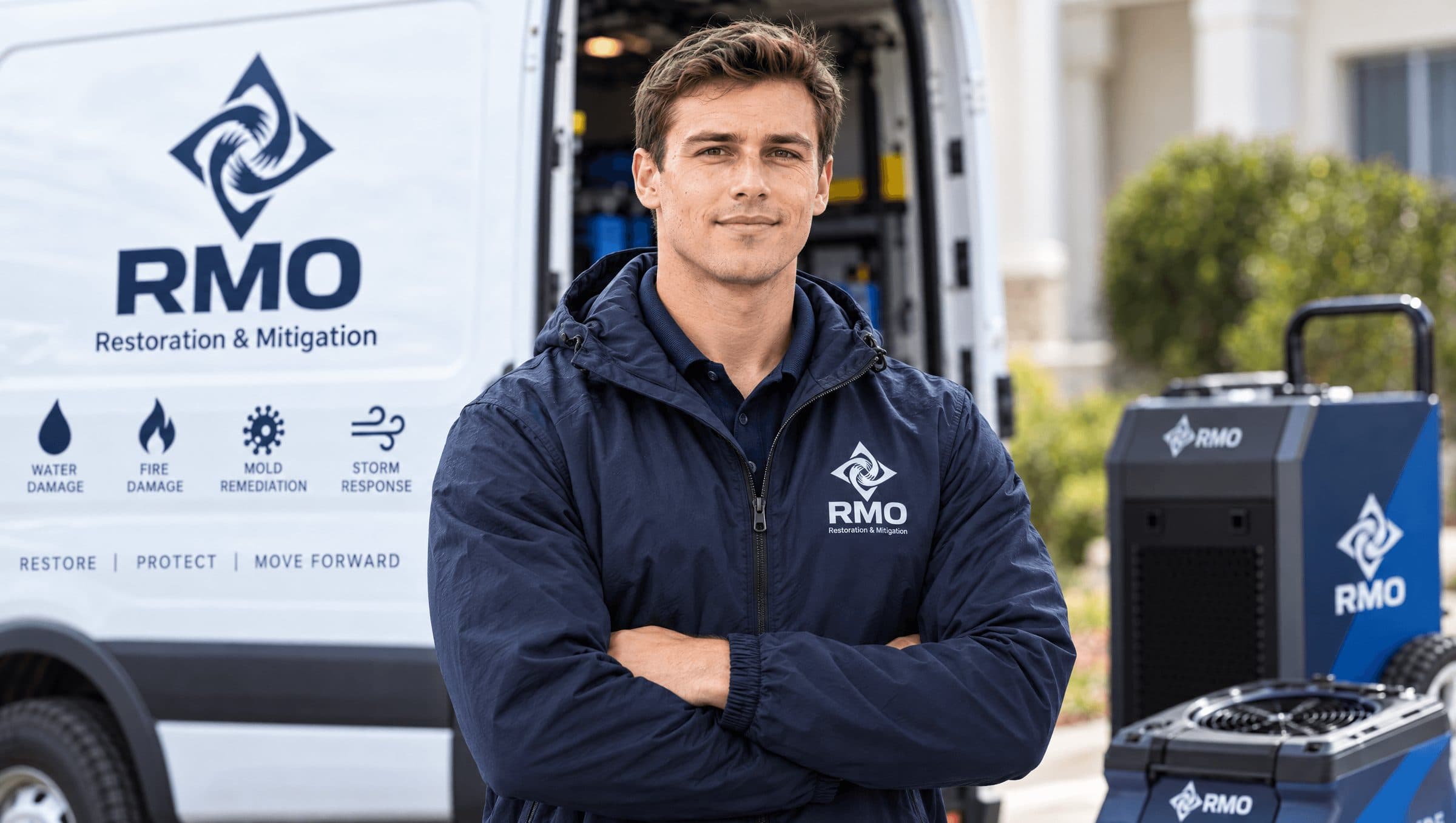
Talk to RMO about mold remediation
Leave your name and number and a coordinator will call you back. If water is still coming in, or there’s smoke or sewage, call now. Crews cover Oakland, Wayne and Macomb counties.
Call 24/7248-845-0000- A person answers 24/7
- On site in about 60 minutes
- We work with your insurer
Your details
Only your name and phone number are required.